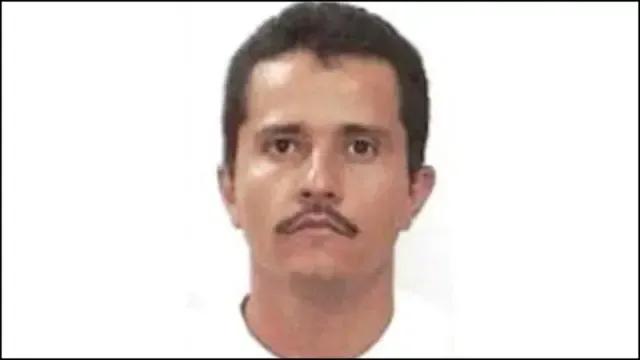
The figure of Nemesio Oseguera Cervantes, known as "El Mencho," has gained relevance not only for his role as the leader of the Jalisco New Generation Cartel (CJNG) but also for the profound implications that his criminal activity has on the security and governance of Mexico. What consequences does his leadership have on the structure of drug trafficking, and how does this affect politics and Mexican society? This analysis seeks to understand the dynamics behind his rise and the global impact it generates, especially in a context where organized crime constantly challenges state authority.
🌐 Current situation and context
In recent years, the CJNG has established itself as one of the most powerful cartels in Mexico, with exponential growth since its formation. According to data from the Mexican Government, the cartel controls approximately 25% of drug trafficking in the country, representing a significant increase compared to previous years. The violence associated with this cartel has led to more than 30,000 drug-related homicides reported in 2022. This phenomenon not only affects public safety but also negatively impacts foreign investment and regional economic development. The presence of "El Mencho" has created a constant environment of insecurity that complicates the everyday lives of millions of Mexicans.
🔍 Analysis of causes and factors
The rise of "El Mencho" to power can be attributed to various structural causes. Firstly, the institutional weakness of the Mexican state in the face of organized crime has allowed groups like the CJNG to thrive without an effective response. Historically, Mexico has struggled with issues such as police and judicial corruption, facilitating the operation of criminal organizations. Moreover, the vacuum left by other cartels after their dismantling has enabled the CJNG to expand rapidly. A report from the National Intelligence Center indicates that "El Mencho" uses sophisticated tactics to recruit young people and co-opt entire communities, establishing a kind of social control that goes beyond simple drug trafficking.
🌍 International comparison and global impact
The situation in Mexico is not unique; other countries have faced similar problems with drug trafficking and its corrosive effects on governance. For instance, Colombia experienced a surge in drug trafficking in the 1980s and 1990s with figures like Pablo Escobar. However, through comprehensive policies that included international cooperation and institutional reforms, Colombia was able to significantly reduce the influence of drug trafficking on its society. In contrast, Mexico still struggles to implement effective strategies that address both the violence and the underlying causes of organized crime. According to data from the World Bank, countries with strong institutions and robust social programs tend to have lower crime rates; thus, Mexico could benefit from learning lessons from these international experiences.
⚖️ Implications and consequences
The implications of the growing power of "El Mencho" are multiple and concerning. From an economic standpoint, the insecurity generated by the CJNG discourages both national and foreign investments; according to a study conducted by México Evalúa, companies report annual losses exceeding $1.5 billion due to organized crime. Socially, the impact is devastating: entire communities live under constant threats, affecting not only their quality of life but also their educational and job opportunities. Politically, the presence and influence of the cartel openly challenge the Mexican state, jeopardizing democratic processes and further weakening institutions.
📈 Strategic perspective and future outlook
Looking ahead, it is crucial to address the problem from a comprehensive perspective that includes both coercive and preventive measures. The strategy should involve strengthening judicial and police institutions to ensure an effective response to organized crime. Additionally, it is essential to invest in social programs that offer real alternatives to communities affected by drug trafficking. A successful approach could mimic certain policies implemented in Colombia or even in European countries where positive results have been seen after significant reforms. If Mexico does not act decisively in the face of this structural crisis caused by figures like "El Mencho," projections indicate a bleak future marked by higher levels of violence and political instability.
In conclusion, understanding the phenomenon of drug trafficking led by "El Mencho" is vital for any analysis of public safety and governance in Mexico today. The decisions made today will directly influence the country's ability to regain its path towards sustainable and inclusive development in the coming years.
Comments