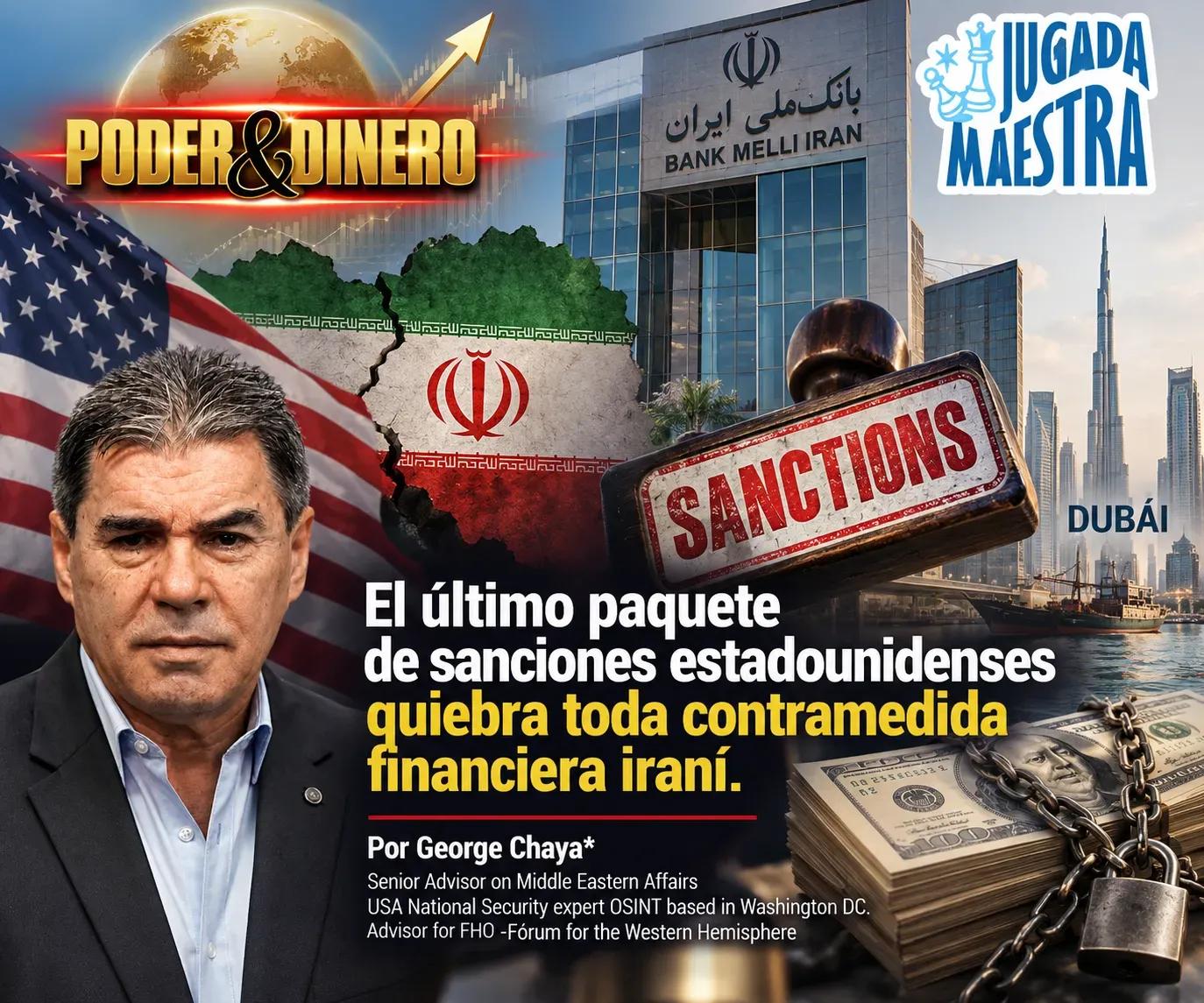
The Economic Marginalization Operation continues and has deepened with all its strength since August 28. That day was key and had a devastating impact on the Islamic Republic facing Washington and Jerusalem. The United States did something unusual regarding the nature of past sanctions. It imposed sanctions on the manager of the Dubai branch of Bank Melli, Mr. Reza Mohammad Taeedi.
Until now, Bank Melli had served as a crucial financial hub for the Iranian armed forces, including the Quds Force of the Islamic Revolutionary Guard Corps and the Ministry of Defense and Armed Forces Logistics, both of which were already sanctioned by the United States, as reported in late August by Mr. Thomas Pigott, spokesperson for the Treasury Office.
However, the United States maintains and deepens its commitment to cutting off and eliminating the Iranian regime's access to the international financial system and the resources it uses to destabilize the region and threaten U.S. interests and partners. The sanctions imposed on September 4 by the U.S. Department of the Treasury against Golden Global Bank, based in Turkey, constitute the latest step in “the Economic Marginalization Operation,” a joint government effort to dismantle networks that allow the regime to launder money, evade sanctions, and finance its allied proxies across the Middle East. This measure sends a clear message to financial institutions around the world: facilitating Iran's illicit financial activities carries severe consequences. It demonstrates the commitment of the Donald Trump administration to eliminate the resources the regime uses to threaten regional stability, support terrorism, and strengthen its military capabilities.
A Hong Kong-based company that has helped designated Iranian individuals and entities in the past by preventing them from accessing the international financial system was also sanctioned. In the same vein, the Financial Crimes Enforcement Network (FinCEN) of the U.S. Department of the Treasury proposed a rule that revoked Banque Misr UAE's correspondent banking access to U.S. financial institutions. The Treasury considers Banque Misr UAE to be a critical node for the Iranian regime to access U.S. dollars. This action from August 28 intensifies and deeply strengthens the pressure campaign against Iran. The message from the Oval Office is clear: since the regime prioritizes its pernicious activities over the needs of its people, we will definitively cut off the economic pillars that sustain it. We will focus on individuals and entities engaged in any financial practices classified and designated as illicit on behalf of the Iranian regime, including those working for Iranian banks abroad.
The sanctions announced on August 28 and reaffirmed on August 29 are imposed under Executive Order 13224, reaffirming previous designations by the U.S. anti-terrorism authority, and Executive Order 13902, aimed at individuals operating in Iran's financial sector. FinCEN also proposed its rules under Section 311 of the USA PATRIOT Act. Thus, Iran's access to the banks of the United Arab Emirates is the objective of the Economic Marginalization and Blockade Operation, the economic faucet of Emirates banks has been definitively shut down, and it has become history for the Islamic Republic of Iran, marking the most painful financial blow it has received in the last 8 months.
Items located in the United States or in possession of or under the control of U.S. persons are blocked and must be reported to OFAC. Likewise, the provision states that any entity that is owned, directly or indirectly, individually or collectively, 50% or more by one or more blocked persons is also blocked. Unless expressly authorized or exempted by OFAC, OFAC regulations generally prohibit all transactions by U.S. persons or within (or transiting in) the United States involving property or interests of blocked persons.
Violations of U.S. sanctions may result in civil or criminal penalties for U.S. and foreign citizens. OFAC can impose civil penalties for violations of sanctions regarding the enforcement of primary U.S. economic sanctions by OFAC.
Prohibitions include making any contribution or providing funds, goods or services by, or for the benefit of, any designated or blocked person, or receiving any contribution or providing funds, goods or services from such person. Non-U.S. persons are also prohibited from causing or conspiring to cause U.S. citizens to violate U.S. sanctions, knowingly or unknowingly, as well as engaging in conduct that evades such sanctions.
Persons located in the United States or abroad who provide information about sanctions violations from FinCEN may be eligible to receive rewards and be compensated if the information they provide leads to a successful enforcement action resulting in monetary penalties over $1,000,000. Additionally, financial institutions and individuals risk being sanctioned for participating in certain transactions or activities with designated or blocked persons.
Similarly, engaging in certain transactions with designated persons may risk secondary sanctions being imposed on participating foreign financial institutions. OFAC may prohibit or impose strict conditions on the opening or maintenance, in the United States, of a correspondent account or payment account through a foreign financial institution that knowingly conducts or facilitates any significant transaction on behalf of a designated person under applicable authority.
The effectiveness and integrity of OFAC sanctions not only stem from its ability to designate and include persons on the Specially Designated Nationals and Blocked Persons List (SDN List), but also from its willingness to remove persons from that list pursuant to law. The ultimate goal of sanctions is not to punish, but to bring about positive behavioral change and to disrupt the illicit actions of criminal networks that serve as facilitators of authoritarian regimes and oppressors of their citizens.
*Prof. George Chaya, is a Senior Advisor on Middle Eastern Affairs USA National Security expert OSINT based in Washington DC. Advisor for FHO -Fórum for the Western Hemisphere

Comments