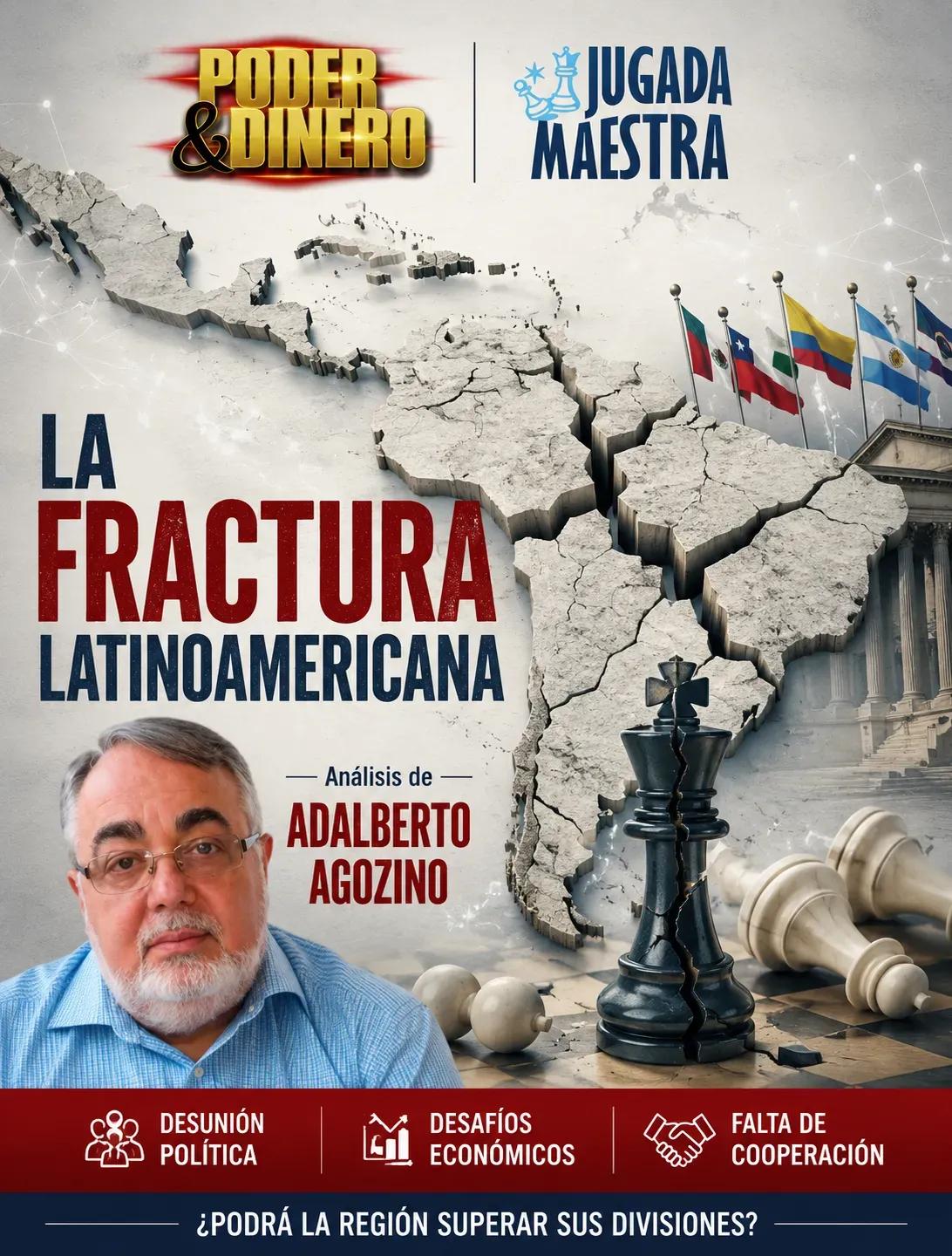
For much of the 21st century, Latin America was presented as a political laboratory where diverse ideological experiences coexisted, from progressive governments grouped around the so-called “pink tide” to liberal and conservative administrations seeking to strengthen market economies. However, behind the programmatic differences, there was a common element: the persistent inability of political systems to respond effectively to citizens' demands regarding security, economic growth, employment, and institutional quality.
This accumulated frustration has ultimately opened a deep rift between citizens and traditional political organizations. The most visible consequence has been the emergence of leaders who build their legitimacy precisely on the rejection of professional politics. They are candidates who present themselves as outsiders, unrelated to the historical parties, who denounce the ruling elites as a corrupt and incompetent caste and promise to rebuild the State from its foundations.
The emergence of these figures is not an isolated phenomenon nor exclusively national. From the Rio Grande to Patagonia, a recurring pattern is observed. Economic deterioration, the expansion of organized crime, the perception of widespread corruption, and disillusionment with democratic institutions have created the conditions for candidates with disruptive discourses to garner the support of broad social sectors.
The American political scientist Samuel Huntington argued that political stability depends on the capacity of institutions to absorb and channel social demands. When that capacity disappears, personalistic leaderships emerge that promise quick solutions to complex problems. Latin America seems to find itself precisely in that phase.
The new political figures share similar ideological traits. In economic terms, they advocate for reducing the size of the State, opening up to private investments, regulatory simplification, and strengthening market mechanisms. On social issues, they tend to adopt conservative positions linked to the defense of the traditional family, criticism of certain expressions of cultural progressivism, and the advocacy of values associated with order and authority.
But it is in the realm of security where they find their main source of popular support. The expansion of drug trafficking, the growth of gangs, the increase in homicides, and the feeling of citizen helplessness have turned public security into the primary concern of millions of Latin Americans. In response, these leaders offer forceful answers: strengthening security forces, toughening penalties, building new prisons, and a direct confrontation policy against criminal organizations.
The electoral success of these proposals is understandable in a region where numerous states have proven incapable of guaranteeing the legitimate monopoly of force. According to various international organizations, Latin America continues to be one of the most violent regions on the planet despite not being embroiled in interstate warfare.
The paradox is that many of these leaders come to power without solid party structures or significant experience in public administration. Their legitimacy fundamentally derives from the emotional identification they manage to establish with sectors of the disenchanted electorate.
Political fragmentation also facilitates their rise. In numerous Latin American countries, the first electoral round often produces extreme vote dispersion. Traditional parties lose mobilization capacity while personalistic candidacies proliferate. As a consequence, some outsiders manage to access the second round with relatively modest percentages.
What happened in various recent elections illustrates this phenomenon. Candidates who initially appeared marginal manage to become recipients of what is called negative voting, that is, voting cast not so much out of adhesion to a political project but out of rejection of the opponent. The second round thus ends up transforming into an emotional plebiscite where fears and antagonistic identities prevail over programmatic debates.
The Argentine political scientist María Esperanza Casullo has pointed out that the rise of these leaderships responds to a representation crisis that permeates the entire region. Citizens no longer necessarily seek rulers with administrative experience, but figures capable of embodying collective discontent and expressing accumulated indignation against the elites.
However, electoral victory tends to quickly reveal the structural limitations of these projects. Governing is much more complex than campaigning.
The majority of these presidents come to power without stable legislative majorities. Latin American political systems, characterized by strong party fragmentation, force leaders to build permanent alliances to pass laws, budgets, and institutional reforms. The anti-political discourse that was effective during the campaign then becomes an obstacle for subsequent negotiation.
As the German sociologist Max Weber warned, democratic politics requires the ability to negotiate with adversaries and build compromises. But outsiders often build their legitimacy precisely on the disqualification of those same actors with whom they later must negotiate.
The consequence is a growing tension between the expectations generated during the campaign and the real possibilities for implementation. Citizens expect rapid transformations while institutions impose much slower rhythms. In that context, frustration can reappear with remarkable speed.
Polarization contributes to exacerbating the problem. In various Latin American countries, elections have ceased to be simple mechanisms of alternation and have become authentic identity battles. Opposing sectors no longer perceive the adversary as a legitimate competitor but as an existential threat to the nation's future.
The Spanish political philosopher Daniel Innerarity has warned that contemporary democracies are experiencing a crisis resulting from the inability to recognize the legitimacy of dissent. When every election is interpreted as a battle between good and evil, defeat becomes psychologically unbearable for broad political sectors.
This phenomenon is reflected in numerous recent post-electoral episodes. In some cases, defeated sectors have questioned electoral results, denouncing alleged fraud without conclusive evidence or promoting legal actions aimed at delaying the proclamation of the winners. The material provided for this analysis precisely shows examples of post-electoral controversies where defeated candidates question the legitimacy of the results and announce social mobilizations to sustain their claims.
Subsequently, when the results consolidate, confrontation usually shifts from institutions to the streets. Social protests take on a central role in the opposition strategy.
Not every mobilization is a threat to democracy. Protest is an essential part of any healthy democratic system. However, when demonstrations explicitly aim to impede the legitimate exercise of power by elected authorities, the situation acquires a different dimension.
The risk is particularly high in societies characterized by high levels of inequality, territorial fragmentation, and institutional weakness. Latin America frequently embodies those three elements.
The British historian Niall Ferguson has noted that polarized societies often enter cycles of mutual radicalization where each side interprets the adversary's actions as a justification to intensify its own response. The result can be a spiral of conflict that progressively erodes governability.
In this context, the new governments face a double challenge. On one hand, they must fulfill the promises that allowed them to conquer power. On the other, they need to demonstrate that they can govern for the entirety of society and not just for their electoral bases.
Historical experience shows that no administration can sustain itself solely on permanent confrontation. Even the most charismatic leaderships require effective institutions, legislative agreements, and minimum levels of social consensus.
The great unknown currently facing Latin America is whether these new leaders will manage to transform citizen discontent into lasting reforms or if they will end up reproducing the same dynamics of frustration that facilitated their rise to power.
What seems indisputable is that the region is undergoing a profound political transition. The party systems built over the last few decades show clear signs of exhaustion. Citizens demand immediate responses to problems that traditional governments have failed to resolve. Insecurity, corruption, and economic stagnation continue to fuel the demand for disruptive leaderships.
However, Latin American history offers a constant warning. Political renewal can open opportunities to strengthen democracies, but it can also lead to new forms of polarization if not accompanied by solid institutions, a culture of dialogue, and respect for the rules of democratic play.
Between the promise of a new beginning and the risk of permanent confrontation, Latin America seems to be at a historical crossroads. The region's future will depend less on the ability of outsiders to win elections than on their ability to build consensus in increasingly fragmented societies. Because seizing power is merely the first act; governing amidst division is, as always, the true test of democracy.
Adalberto Agozino holds a PhD in Political Science, is an International Analyst, and is a Professor at the University of Buenos Aires.

Comments