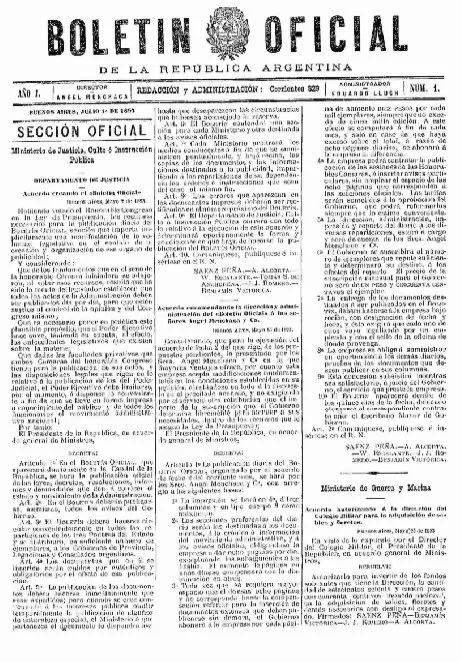
The Official Gazette is a fundamental tool for transparency and legality in public management. In a context where citizen trust in institutions is at critical levels, it is imperative to analyze how this mechanism can influence governance and regulatory compliance. The central question is: how can the Official Gazette strengthen democracy and accountability in Argentina? This analysis reviews its function, impact, and international comparisons to understand its current relevance.
📜 Current Landscape
In Argentina, the Official Gazette acts as the government's official communication medium, where laws, decrees, and resolutions are published. According to data from the Ministry of Justice, over 15,000 provisions are published annually, reflecting intense legislative activity. However, access to this information remains limited for a large part of the population. A study conducted by the Center for the Implementation of Public Policies for Equity and Growth (CIPPEC) indicates that only 30% of citizens are aware of its existence and function. This poses a significant challenge for governmental transparency and citizen oversight.
🌍 International Comparison
In countries like Chile, the Official Gazette has been modernized with digital platforms accessible to the public, allowing for more effective tracking by citizens. Chile reported that more than 60% of its population has digital access to this information, thereby facilitating greater citizen participation in legislative processes. On the other hand, in Sweden, access to official documents is considered a fundamental right, promoting a culture of transparency that has strengthened trust in institutions. These examples demonstrate that efficient management of the Official Gazette can have a direct impact on public perception of governmental integrity.
⚖️ Implications
The lack of effective access to the Official Gazette can have serious consequences for Argentine democracy. Legislative opacity fuels suspicions of corruption and abuse of power. According to a report from the World Bank, countries with high levels of institutional transparency tend to experience average economic growth 2% higher than those with less transparent systems. In Argentina, strengthening access to the Official Gazette could not only improve accountability but also boost investments and foster a healthier business climate.
🔍 Future Strategy
It is essential to implement a strategy that considers not only the digitization of the Official Gazette but also educational campaigns to inform citizens about its content and utility. A significant improvement could include mobile applications that allow easy access to the most recent publications. This could increase the percentage of citizens informed about critical government decisions to more than 50% in the next five years. International experience shows that these actions not only increase citizen participation but also generate a positive effect on public perception of institutions.
In conclusion, strengthening the Official Gazette is crucial to advancing towards more transparent and accountable governance in Argentina. The lessons learned from other countries provide a clear path towards meaningful improvements that could radically transform the relationships between citizens and their governments. Without a doubt, investing in this institutional resource is not just an administrative issue; it is a strategic decision that directly impacts the democratic quality of the country.
Comments