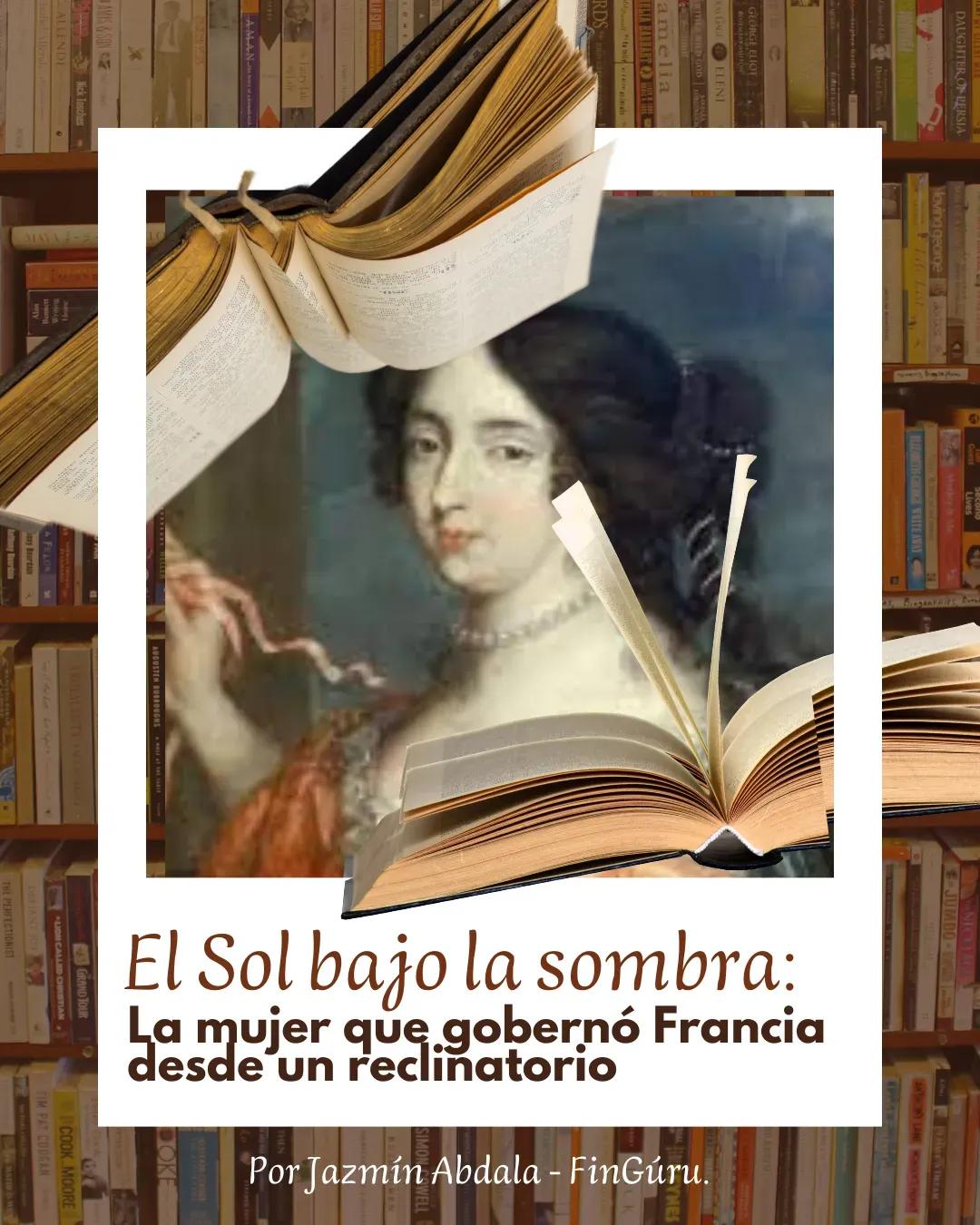
The France of the Sun King was not a country; it was a theater stage where every gesture, from the way of holding a glass to the depth of a bow, determined civil life or death. In this ecosystem of excesses, where gold even coated the latrines and pride was measured by proximity to the monarch, the figure of Françoise d'Aubigné emerges not as just another piece of Versailles furniture, but as a systemic anomaly. Her figure redesigned the genetic code of the monarchy at a moment when the nation was exhausted by wars and the aristocracy lived in a gilded cage, under an unrelenting sun that was beginning to blaze with the fire of fanaticism.
To understand that era, one must smell it. Versailles, at the height of its glory, stank of a mixture of dense jasmine and musk perfumes that attempted, in vain, to mask the stench of unsanitary conditions and the stagnant water of the fountains. The hallways were a parade of heavy silks and Chantilly lace that cost the annual salary of an entire village. Men wore wigs so high they had to duck to cross thresholds, dusted with flour while the common people starved for lack of bread. Women squeezed into whale-bone corsets that made it hard to breathe, a physical reminder that at court appearance was the only freedom allowed and the body was political territory.
Françoise d'Aubigné was born at the opposite end of that spectrum. Her first contact with the world was not silk, but the damp stone of the Niort prison. Daughter of a disgraced aristocrat, a forger and murderer who squandered the inheritance of a poet grandfather, Françoise learned early that a surname is a burden if there is no gold to support it. From the cell, she was sent to the deck of a ship bound for the Antilles. In Martinique, under a sun that spared no lineage, the "Beautiful Indiana" witnessed how wild nature ignored European protocols. There, amid indigenous people and failed plantations, a resilience was forged that the ladies of Versailles, raised amid cottons, could never comprehend. When she returned to France, orphaned and begging for food in the streets of La Rochelle, she brought with her the best-kept secret of power: the ability to be invisible in order to observe.
That observation led her to the literary salons of Paris, the true internet of the 17th century. She married Paul Scarron, a literary genius whose body was so deformed by illness that he looked like a human knot. In that marriage, which many saw as a sacrifice, Françoise earned her doctorate in influence. While caring for a husband who could not move, she became the host of a salon where the French we know today was polished. She learned that the exact word is deadlier than a sword. In those salons, the intellectual resistance against Catholic rigidity was gestating, and she, astute, navigated between bohemia and devotion, building a network of contacts that included the very Madame de Montespan, the official favorite of King Louis XIV.
Montespan was Baroque at its peak: carnal, loud, bedecked with jewels, and prone to jealousy scenes that shook the glass walls. When she hired Françoise as a governess for her illegitimate children, she did not know she was bringing into her bedroom the Trojan horse that would destroy her reign. Françoise introduced rigor into the court, an aesthetic and political break: while other mistresses covered themselves in diamonds to attract the King’s attention, she chose dark velvet and a black lace mantilla. It was not humility; it was a declaration of cultural war. By dressing as a devotee, she was sending a subliminal message to the monarch: "I am the peace your conscience needs, not the sin your body desires."
The economic moment of France was a bloody paradox. While banquets with liquid silver tableware were served in the Hall of Mirrors, outside the golden gates, famines were reaping entire provinces. Louis XIV’s system consisted of domesticating the nobility by forcing them to live in the palace, spending fortunes on clothing and gambling so they had neither time nor money to conspire in their castles. Absolutism was financed by suffocating the peasantry. Françoise, who had felt the cold of begging, understood that this system was unsustainable unless given a moral purpose. Her influence was not merely romantic; it was a spiritual audit of the State.
Louis XIV, the man who thought he was the center of the universe, was aging. The wounds of war and the excesses of youth were beginning to take their toll. He sought refuge, and he found it in Françoise's kneeler. She did not ask for noble titles for her family; she asked for the salvation of his soul. This dynamic transformed Versailles. The palace ceased to be a luxury brothel and became a monastery of power. Gallant parties were replaced by masses; décolletés were closed and silence became the new etiquette. The night of October 9-10, 1683, just three months after the death of Queen Maria Theresa, the Sun King married in secret the granddaughter of the prisoner. She became Madame de Maintenon, the queen without a crown.
Her power was managed in the shadows, in that space between the bedroom and the study. While the King received ministers in official sessions, she knitted in a low-backed chair, apparently absorbed in her needlework. But when the ministers left, it was she who analyzed the reports. Her rise explains the transition from absolutism of glory to absolutism of control. She was the architect of a new order where religion became a tool of national unification. She is credited with a fundamental role in the Revocation of the Edict of Nantes, a disastrous decision that prohibited Protestantism and prompted the exodus of the brightest minds in France. For Maintenon, the unity of faith was the only guarantee of the throne’s unity. It was not blind fanaticism; it was social engineering.
Through her we can break down the foreign policy of the end of the century. The War of Spanish Succession, which bled Europe dry, was the last great struggle of this couple. Maintenon pushed the idea that France should dominate the continent through the Bourbon inheritance in Spain. The cost was atrocious misery for the French people, but in the bubble of Versailles, she kept the King convinced that his sacrifice was for the greater glory of God. She did not only govern the monarch's emotions; she governed the maps of embassies.
However, her most lasting legacy was not a war, but a school: Saint-Cyr. There, Françoise founded the "Royal House of Saint-Louis" for girls from poor nobility. It was her way of replicating herself. She taught them that a woman without fortune has only two weapons: her virtue and her language. In Saint-Cyr, the purest French of Europe was spoken. She understood that language is the foundation of culture and diplomacy; if you manage to make the entire elite speak with the same elegance and precision, you have created a standard of civilization that no one can ignore. The young women of Saint-Cyr emerged prepared to manage homes or convents with a discipline that was, in essence, the discipline of a centralized State.
Towards the end of her days, the shadow of Maintenon was so long that even the legitimate children of the king feared her. Courtiers called her "The Witch" or "Madame Everything," resentful because a woman of uncertain origins dictated how they should behave before God. But she never lost her composure. Her life was a performance of self-control. When Louis XIV died in 1715, she did not stay to claim a regency. She retired to Saint-Cyr, the only place where she truly felt the owner of her work.
The closure of this story is the whisper of a woman who, feeling death near at 83 years old, ordered her letters to be burned. It was her last act of sovereignty. She destroyed the evidence of her love, ambition, and doubts, leaving historians only with the public facts of her mandate in the shadows. Françoise d'Aubigné did not want posterity to see her as a vulnerable wife, but preferred to be remembered as a power enigma.
She died surrounded by the girls she taught that silence and polished speech are the tools of survivors. She was the beggar who stripped the most absolute monarch of his will, the woman who used the rosary to guide the cannons of France. In the end, she not only conquered Louis XIV; she captured the dusk of a century and forced it to kneel, leaving a legacy of rigor and order that the Revolution, decades later, would arrive to try to destroy, ignoring that the heads they would cut off had been educated, precisely, under the language of distinction that she so diligently worked to create. In short, Françoise was the woman who proved that in the politics of kings, the shadow is often more powerful than the sun.
Bibliography:
Historical Sources (Primary) Saint-Simon, Duke of. Memoirs (Vol. I and II). This is the main source of the "hatred" towards her. His sensory descriptions of the court are fundamental to your narrative.
Sévigné, Madame de. Letters. Offers insight into the Parisian salons and the perception of Françoise before she became a marchioness.
Maintenon, Madame de. Selected Correspondence. Although she burned many, the ones that survive (especially those sent to her students at Saint-Cyr) reveal her educational and religious thoughts.
Modern Biographies and Analyses Buckley, Verónica. Madame de Maintenon: The Secret Wife of Louis XIV. This is one of the most comprehensive biographies exploring her rise from poverty.
Fraser, Antonia. Love and Louis XIV: The Women in the Life of the Sun King. Useful for understanding the political transition between the mistress Montespan and the wife Maintenon.
Bryant, Mark. Queen of the Shadow: Madame de Maintenon. This book is key for analyzing the real political power she exercised in war councils.
Castiella, Anabel. The Marchioness of Maintenon: A Woman at the Court of the Sun King. A Spanish perspective on her cultural influence and legacy at Saint-Cyr.
Articles and Essays National Geographic History. Madame de Maintenon, the secret wife of Louis XIV. Useful for the structure of "social ascent."
Girondin, Micaël. Madame de Maintenon: History and influence in the French court (2025). Excellent for breaking down her linguistic and educational legacy.

Comments