People imagine high-risk assignments as a constant motion: doors slamming open, radios crackling, decisions made in seconds.
The truth is, even in places like Monterrey, there was waiting. Long periods of it.
The mission never disappeared; it settled at the bottom, like a constant electric hum.
During those pauses, I would sometimes drive to a neighborhood that most avoided.
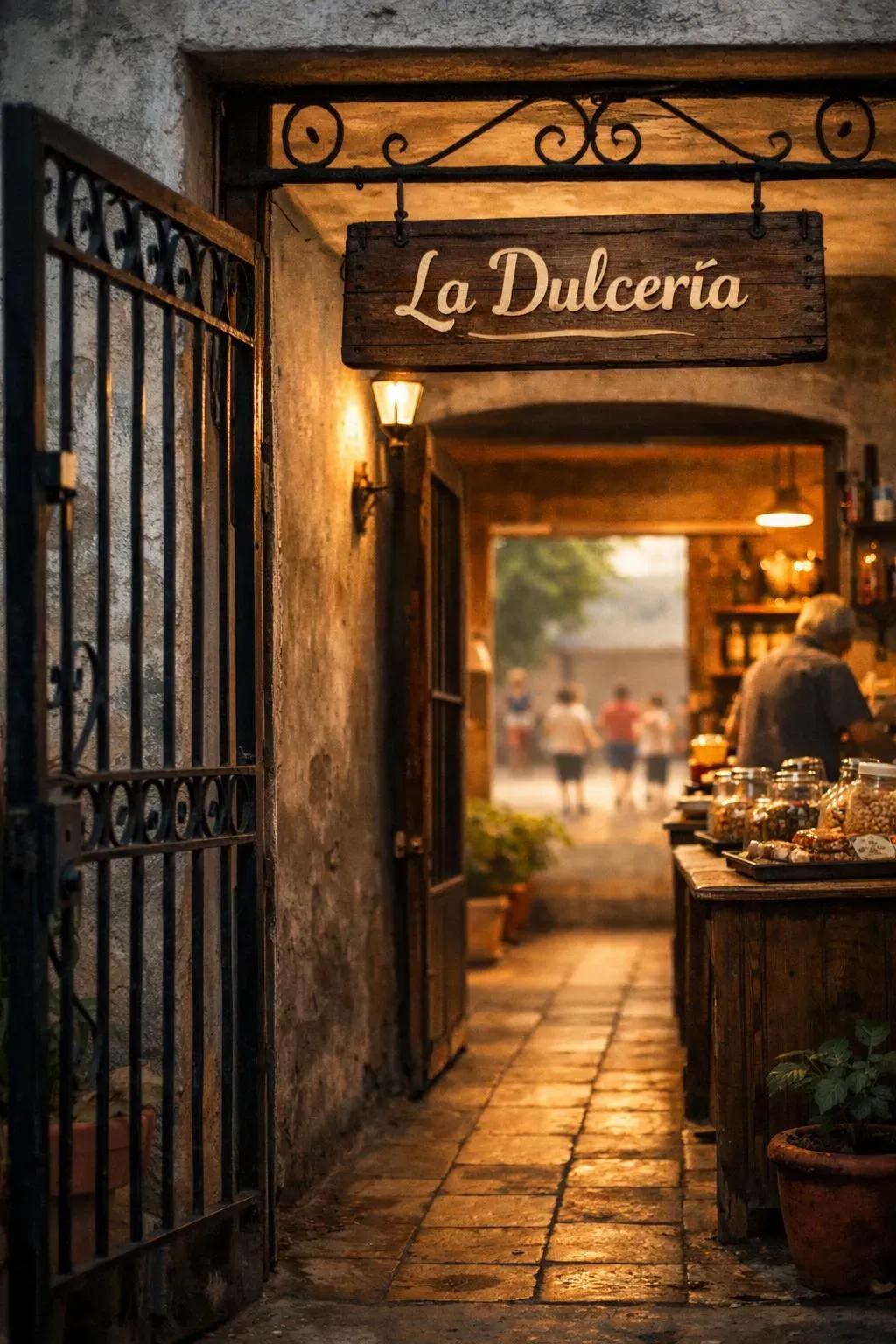
Nothing outside drew attention. There were no bright signs or displays.
Just a metal gate set into a worn facade. If you didn’t know it was there, you could pass by without noticing it.
You would walk through the gate and enter a narrow, tiled hallway, shaded and silent.
The noise of the street faded behind you. Halfway down the corridor, you would turn right. Only then did the entrance appear.
The candy shop.
It had once been a house, and it still looked like one. The front functioned as a store; the production took place in the back, where pots boiled and trays cooled on stainless steel tables.
The family had been in the business for over twenty years. Everything was done right there: burnt milk poured into molds, wafers carefully stacked, caramel-filled cookies lined up in precise rows.
My favorites were the cajeta gorditas, still warm, with the soft filling in the center.
As soon as you crossed the door, the air changed.
The chocolate made its way—dark and warm—but was intertwined with vanilla, cinnamon, crushed strawberries, ripe mango, peaches that perfumed the room. The aromas didn’t float; they enveloped you.
They entered the lungs and settled there, immediate and alive, as if the body recognized something before the mind.
Underneath the sweetness emerged the sound. The metallic clanging of trays.
The constant buzzing of the machine mixing chocolate. From the school across the street, the laughter of children filtered through the open door and faintly resonated down the hallway on the wings of the wind.
It was an ordinary symphony—sugar, metal, machinery, children—but in that neighborhood, it felt almost like an act of defiance.
Without noticing, my shoulders relaxed. The vigilance that was already instinct eased a bit.
For a few minutes, the city loosened its grip.
Paco supervised everything with calmness. His family ran the business as they always had: without spectacle and without haste.
There was order everywhere: trays cooling on the tables, baskets being filled and refilled, clean surfaces ready for the next batch. Production, not display.
Despite being in the heart of one of the most dangerous neighborhoods in Monterrey, the store was never disturbed by organized crime. The family was known.
They had served the community for decades. They caused no trouble. They treated everyone with respect.
In a city marked by fear, reputation still carried weight. Decency, it seemed, worked as a kind of armor.
When high-level visitors came from Washington, I took them there. Not for spectacle. Not as a cultural detour.
I wanted them to feel the rhythm of the streets beyond the reports and intelligence summaries.
To see that, even in neighborhoods marked on maps for other reasons, families continued to work, cook, laugh, and open their doors.
Walking through those streets reminded me of my grandparents' neighborhood in Brownsville, Texas.
As a child, I could tell what each house was preparing just by passing by the gate: boiling beans, frying meat, tortillas warming on the comal. The air carried the history of each home before anyone spoke.
That same intimacy lived here. At first, it puzzled me; then it gave me strength.
From the school, the laughter of children arrived in bursts—clear, carefree, unfiltered.
Sometimes I watched them from the gate, running without hesitation, shouting without calculating.
Their joy seemed fragile to me. Not because it was weak, but because it was intact.
For a moment, I envied them.
What followed wasn’t blame but recognition. The burdens we carry as adults do not ask for permission before settling in.
Some are chosen. Others are not. Innocence, once given up, does not return.
Standing at the entrance of a candy shop, I understood that I would never inhabit the world as they did.
In the end, I would walk back down the narrow hallway and cross the gate again into streets that I knew too well.
The vigilance returned easily. It always did.
The laughter of the children faded behind me, replaced by the familiar hum of responsibility.
I didn’t resent the life I had chosen. But there, at the threshold, breathing in chocolate and cinnamon, I understood something clearly: innocence is not lost in a blow. It is given up, piece by piece, to experience.
The candy shop did not return to me what time had taken.
It only reminded me that it once was mine. And for that, I am grateful.
Leo Silva is a former resident agent in charge of the DEA (Monterrey Resident Office) and author of Reign of Terror and El Reinado del Terror. With decades of frontline experience in the fight against transnational cartels, Silva brings us closer to some of the most dangerous operations directed against high-value cartel leaders and organizations.
Author's Note
This reflection comes from a very specific and, at the same time, universal place. Amid complex and high-tension environments, I learned that humans seek small spaces where the world regains meaning, even if only for minutes.
The candy shop was not an escape from reality. It was a reminder of it in its simplest form: honest work, community, childhood, the aroma of chocolate, and the laughter of children. Sometimes, that is enough to hold us up.

Comments