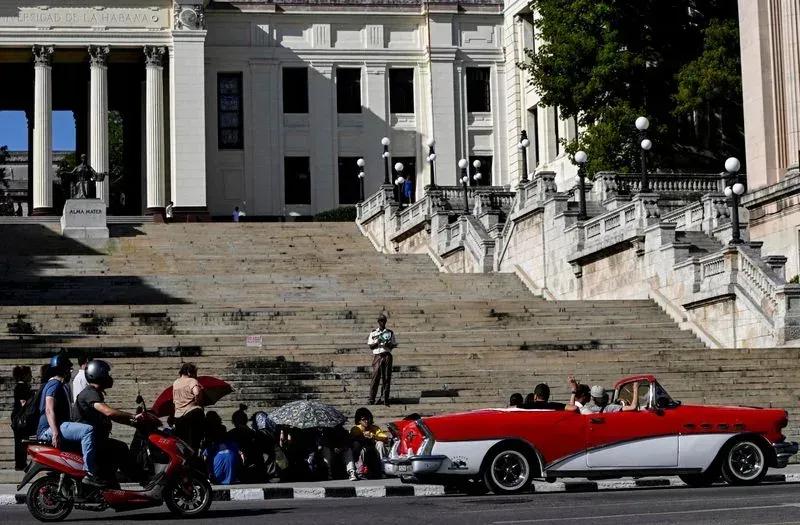
Cuba on pause
There are countries that live looking to the future. And there are others that survive negotiating with their past. Today, Cuba seems to be in that second category: an island burdened by the symbolic weight of its Revolution while trying, almost blindly, to navigate a crisis that many are already describing as the most severe in decades.
For over half a century, the narrative about the "imminent end" of the Cuban system has repeated itself like a slogan in international politics. It has been said by presidents of the United States, analysts, exiles, and even entire books dedicated to predicting its fall. However, capricious and often ironic history has always found a way to give Havana a little more time.
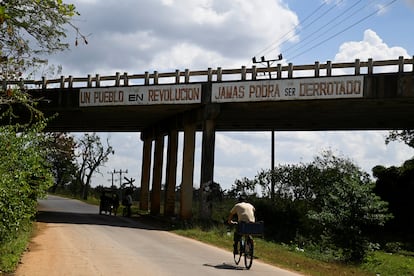
A crisis that can no longer be hidden
Everyday life on the island has transformed into a basic survival equation. Blackouts lasting up to 20 hours, empty pharmacies, practically paralyzed transport, and increasingly difficult-to-obtain food. Scarcity has ceased to be an exception and has become a routine.
For decades, the official narrative maintained that social achievements compensated for economic limitations. Universal education, a recognized healthcare system, and certain social stability served as pillars of internal consensus. But today, those same achievements appear eroded by a lack of resources and institutional wear and tear.
The impact is felt in concrete indicators: rising infant mortality, deteriorating health conditions, persistent inflation, and wages losing value at a speed that the state economy cannot halt. This is compounded by a growing migration that, more than a personal decision, becomes a collective survival strategy.
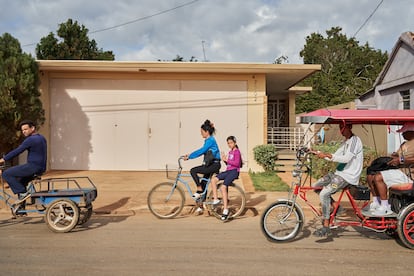
The external factor
On the international level, the context does not help either. U.S. foreign policy has hardened again, and the global scenario no longer offers Cuba the strategic support it had during the Cold War. The fall of energy allies or the reduction of oil supply deepens an energy crisis that threatens to paralyze key sectors.
The diplomatic and economic pressure is combined with increasingly direct messages from Washington. Donald Trump's leadership insists that the Cuban system is close to collapse, a diagnosis that has been cyclically repeated since 1959 but now finds an island more vulnerable.
On the other hand, Miguel Díaz-Canel's government tries to maintain a known strategy: resist, buy time, and avoid deep reforms that could destabilize political control. The dilemma is evident: opening up the economy entails risks for power; not doing so could worsen social deterioration.
A weary but prudent society
Social discontent exists and is visible. It is perceived in endless queues, in sporadic protests, and in everyday conversation. However, the memory of the repression of recent demonstrations continues to serve as a brake.
Unlike other historical processes, massive protest does not appear, at least for now, as the main channel for change. The escape valve remains migration. In political terms, this poses a structural challenge: a system can withstand for a long time if those who question it choose to leave rather than confront it.
The Revolution without its historical leaders
The physical disappearance of Fidel Castro marked the end of a symbolic era. His figure served as a axis of legitimacy and cohesion that no longer exists today. Without that charismatic leadership, the revolutionary project faces the challenge of redefining its narrative in a world that has changed too quickly.
The globalized economy, social networks, and constant comparison with other development models starkly expose the limitations of the system. The less ideological and more connected younger population observes the present with a mixture of frustration and pragmatism.
Collapse or resilience?
Talking about the “end” of the Cuban Revolution is tempting, but also risky. History shows that the system has a remarkable ability to adapt under extreme conditions. It did so after the fall of the Soviet Union and might do it again.
That the model can survive is unlikely, but there is a possibility; the question is under what conditions it will do so. A profound humanitarian crisis, a massive migratory exodus, or a gradual economic opening are possible scenarios that coexist in the international debate today.
What does seem clear is that Cuba can no longer indefinitely sustain the current balance. The island is on pause, waiting for a definition that may come from within or from outside.
In international politics, as in life, resisting is also a way to decide. And Cuba has been making that decision for more than six decades. With relative success, with enormous costs, and with a future that, this time, seems more uncertain than ever.

Comments