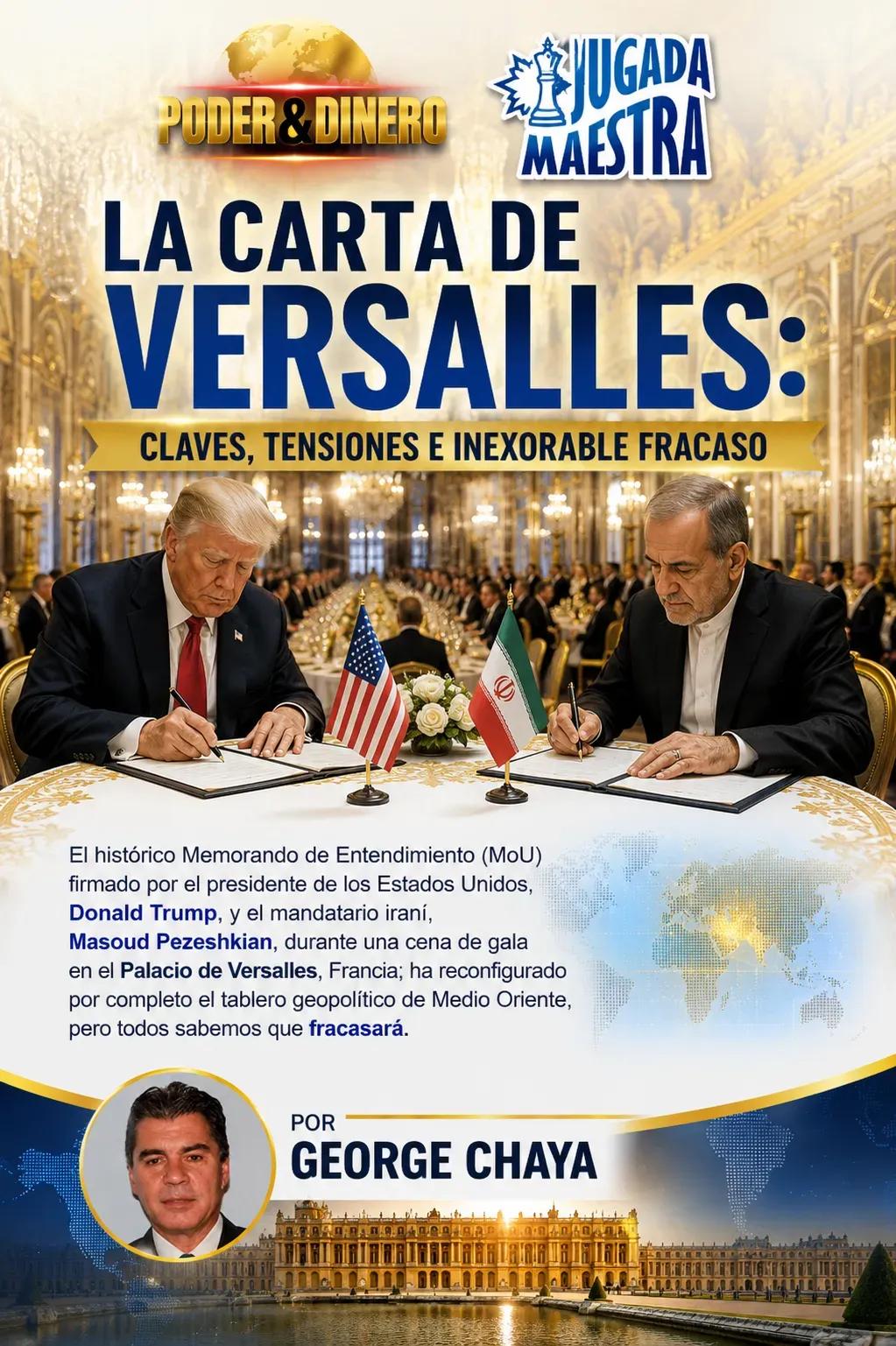
After a devastating military escalation marked by intense U.S. bombings of nuclear complexes and strategic infrastructures of the Islamic Republic, the two powers signed the 14-point document that initiates a 60-day truce extendable (which will not be respected) to negotiate a definitive peace agreement (which is unlikely to see the light of day while the mullah regime is in charge in Tehran). Although the official announcement has sparked a sense of immediate relief in international markets -with a marked drop in Brent prices after the reopening of the strategic Strait of Hormuz was confirmed-, the official text conceals extremely strict conditions, strong military warnings, and a financial labyrinth that ignited and keeps alive the global debate.
Nevertheless, one of the central points of the agreement focuses on the thorny Iranian nuclear program. The memorandum freezes the status quo of its atomic activities and imposes the unrenounceable commitment of Tehran to never seek or manufacture weapons of mass destruction.
Donald Trump himself was categorical in stating that Iran's reserves of highly enriched uranium -which he colloquially described as “nuclear dust”- must be completely neutralized. The agreement stipulates that all this radioactive material will be diluted on-site under the strict supervision of the International Atomic Energy Agency (IAEA). The U.S. government seeks to ensure that Iran does not rebuild the underground complexes that were destroyed by B-2 strategic bombers during the peak of the armed conflict.
This is followed by no minor point, such as the economic chapter which undoubtedly generates the most controversy and bewilderment at the international level. Iran had initially requested a direct compensation of $400 billion from Washington for the damages caused by the war. However, the White House firmly blocked the use of American taxpayers' money.
The diplomatic solution was realized in the creation of an ambitious global private investment vehicle valued at $300 billion dedicated exclusively to the reconstruction and economic development of the Persian nation. As clarified by senior administration officials and Vice President J.D. Vance, this fund will operate under open market premises without public funds, meaning there will be no state subsidies or direct cash transfers from U.S. coffers (almost
laughable statements from JD Vance exposing his incapacity and placing him far from the foreign policy capabilities of Marco Rubio).
Private consortia will provide the international corporate injection and the Arab Gulf countries, Asia, South America, and Africa have already committed financing to reactivate key sectors such as energy, maritime logistics, manufacturing, and transportation. Iran will only be able to integrate into this global economic ecosystem as it verifiably meets the agreed commitments.
Simultaneously, the U.S. commits to lifting its unilateral economic sanctions and allowing the gradual release of blocked Iranian sovereign assets abroad. Nevertheless, Washington maintains control over these finances through oil and banking waivers that will closely monitor Tehran’s behavior.
The political plan of the memorandum -which seems to have been made several months ago, despite only being a couple of weeks old- highlights the mutual commitment of both nations to respect territorial sovereignty and refrain from interfering in each other’s “internal affairs.” This clause represents a significant setback for Iranian dissident groups in exile, who had counted on previous promises of support from the White House.
Moreover, the pact stipulates a cessation of naval hostilities (which was already broken into pieces bilaterally last weekend) that required Iran to technically clear the Strait of Hormuz within a maximum of 30 days to normalize the navigation of commercial vessels.
Despite the optimistic speeches -though lacking substance- of regional pacification from Vice President Vance, who has shown doubts about being the right man for what President Trump has entrusted him with, the atmosphere at the Palace of Versailles was one of deep mutual distrust and that day seems to have been far behind in time.
After the signing, Trump resorted to his usual maximum pressure rhetoric warning the G7 leaders that, if the Islamic Republic violates the agreement, the Pentagon is ready to “drop bombs right in the middle of their heads.” For his part, the chief negotiator and president of the Iranian Parliament, Mohammad Bagher Ghalibaf, harshly responded to local media assuring that the distrust towards Washington is total and that the Iranian army keeps “its finger on the trigger” against any external provocation.
Hours continue to pass, the 60-day deadline for forging the definitive peace treaty is very close, when the day comes, the memorandum must immediately be endorsed by a “binding” Resolution of the United Nations Security Council. However, everything is further away than expected in terms of real and positive progress.
In conclusion, is the Versailles memorandum the last great opportunity to stabilize global energy supply and completely dissipate the drums of an extended war in the Middle East? The author, dedicating over three decades to the study and research of the geopolitics of the region and having traversed the area on the ground for the same period, can assert reliably and professionally to the reader: that Versailles is a wasted opportunity and time, that will not harbor anything positive nor pacify the region as long as the Tehran regime and its proxies maintain operational capacity and economic availability. There will also be no negotiated exit through diplomacy under any circumstances. Anyone harboring hope and trusting in the fulfillment of commitments assumed by the Khomeinist regime will soon wake up to a bitter, frustrating reality that is completely contrary to their expectations.
Prof. George Chaya, is a Senior Advisor on Middle Eastern Affairs USA National Security expert OSINT based in Washington DC.
Comments