On August 1, negotiations will begin between the representatives of the National Assembly elected in 2015 and representatives of the interim government, a process driven by the administration of Donald Trump.
Today, this is the most viable institutional path to build a reliable electoral exit in Venezuela, renew the National Electoral Council (CNE), the Supreme Tribunal of Justice (TSJ), and call for elections. This process has a clear beneficiary: the people of Venezuela, but in addition, any moderately reliable electoral process would be won by María Corina Machado. A new CNE is not a threat to her leadership; on the contrary, it is the way to ratify it at the polls.
We are facing a scenario of a negotiated transition. In their classic work Transitions from an Authoritarian Government (1986), Guillermo O’Donnell and Philippe Schmitter identified a pattern that recurs in these processes: regimes that negotiate their exit seek guarantees that they will not be politically annihilated and therefore favor gradual paths rather than abrupt breaks. Spain resolved this with Adolfo Suárez dismantling Francoism from law to law. Chile played its plebiscite of 1988 within the Electoral Service inherited from the regime. South Africa negotiated its Electoral Commission at CODESA, after years of prior scaffolding. The common denominator is not that the opposition controls the referee from day one, but that there is a formal path that reduces uncertainty for those ceding power.
The Venezuelan opposition has something in its favor that neither South Africa nor Chile had at the beginning: a constitutional mechanism, internationally recognized, the National Assembly of 2015, whose opposition majority was never dissolved through legitimate means. Represented by its president, the deputy Dinorah Figuera, who does not act personally; she represents the National Assembly, which has the constitutional authority to appoint the CNE and the TSJ.
Let’s not fall into a false dilemma of confusing political-electoral leadership with constitutional competence. Not even Edmundo González Urrutia, elected president on July 28, 2024, has the authority to appoint CNE rectors or TSJ magistrates: that is an exclusive right of the Legislative power, not the executive. There is a Constitution that distributes different functions to different powers. And we must start to comply with it.
Waiting for the perfect negotiation is a utopia: transitions are chaotic processes, with friends and enemies. But thank God there is a real possibility after January 3 and with the support of the USA. Let’s not take luck for granted: the more factors we support the electoral path, the greater the chance of success.
We must push for a national coalition for the transition that goes beyond the CNE and the TSJ: it is about reinstituting the Republic, dismantled for more than two decades since a constitutional fraud endorsed by the Supreme Court in 1999.
“On July 28, Venezuelans won against Maduro's CNE, and they stole the election from us. Why will this time be different? To begin with, Maduro is no longer here, and there is a clear institutional route, in three stages: first, restore the CNE and the TSJ; then, create conditions and guarantees for an electoral exit; and finally, the transition itself. It is not a leap of faith; it is a verifiable process step by step, and we can evaluate it based on its concrete results: verifiable electoral reform, clear calendar, real guarantees. Taking another path is not only unviable, it is unconstitutional; in plain language, ‘this is what we have’.”
PS: Do Venezuelans have the right to distrust? Of course. But also distrust those who propose ways outside the constitution, just as Hugo Chávez arrived. The rectors of the CNE must be appointed by the National Assembly. The Constitution is clear.
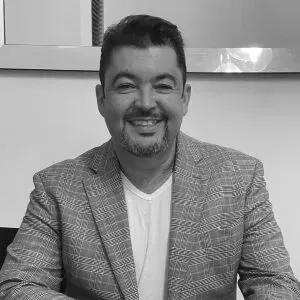
Roberto Marrero is a Venezuelan lawyer and political leader. He was persecuted by Nicolás Maduro's regime and imprisoned for more than a year in the detention center of the Bolivarian Intelligence Service (SEBIN) known as "El Helicoide." Once released, he fled to the United States and was able to return to his country after the capture of Nicolás Maduro on January 3.

Comments