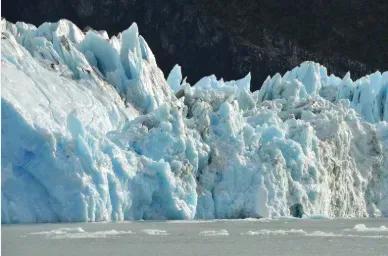
The Friction Point: The Periglacial Environment
While no one dares to question the protection of the "white" glacier (the visible ice mass), the real political and legal battle takes place in the periglacial environment. These are frozen soils that contain saturated ice, acting as critical water reservoirs in arid areas. Much of the most coveted metal deposits in the Andes mountain range are precisely located beneath this soil. For the industry, the periglacial environment is a geographical hindrance; for the ecosystem, it is a guarantee of water during droughts.
Critique of Implementation: A Drip-Feed Inventory
The biggest Achilles' heel of the law has been its execution. The National Glacier Inventory, although completed by the IANIGLA, has been the target of constant legal battles by mining provinces and companies seeking to redefine what is and is not a glacier to "liberate" areas for exploitation. The delay in effective application allowed mining projects in questionable areas to remain operational, operating in a vacuum of control.
Current Threats and Setbacks
Recently, the spirit of the law has faced attempts at reform that seek to "flexibilize" technical definitions. Under the argument of attracting investments and fostering economic development, it is proposed to reduce protection only to large glaciers or those that have a "demonstrated" and "relevant" water contribution. This logic is dangerous. Science warns that in the global context, small glaciers are the most vulnerable and often the first to disappear, affecting the microclimate and soil moisture irreversibly.
Open-Pit Mining: The Direct Impact
Metal mining in the mountain range is not a low-impact activity. To extract a few grams of gold or copper per ton, massive volumes of rock need to be removed. In glacial and periglacial zones, this generates three critical problems:
Destruction of the "permafrost": Removing soil in the periglacial environment destroys the frozen soil layer that retains water. Once that ice melts due to land removal, the ecosystem loses its ability to regulate water for the lower valleys.
Atmospheric Dust: The passage of heavy machinery and blasting generates clouds of dust. When this dust settles on the white ice, it decreases the albedo (the snow's ability to reflect sunlight). The ice becomes darker, absorbs more heat, and melts much faster.
Acid Rock Drainage (ARD): By removing rocks that were underground, they come into contact with oxygen and melting water, generating acids that can contaminate the water basins that originate precisely in those glaciers.
The National Glacier Inventory (NGI), coordinated by the IANIGLA, is not just a map; it is a legal document. If an area is in the inventory, it is untouchable.
The Debate over "Size"
One of the most criticized points by pro-mining sectors is that the inventory includes ice bodies of up to 0.1 hectares (a small area, similar to a third of a football field).
The mining stance: They argue that protecting "patches of ice" this small halts billion-dollar projects without any real water benefit.
The scientific stance: Argues that the sum of thousands of small bodies of ice and frozen soil is what keeps rivers alive in arid provinces like San Juan, Mendoza, or Catamarca. Eliminating the small ones, drop by drop, dries the watershed.
Why is it so difficult to regulate?
Here comes the critique of political management. Although the law exists and the inventory too, regulation is weak for two reasons:
Jurisdiction: Natural resources belong to the provinces (by Constitution), but the law is national. This creates a constant clash where mining provinces feel that the Nation is "stepping on them."
Lack of budget: Monitoring glaciers at 4,000 meters requires technology, helicopters, and specialized personnel. Without funding, the law is a "paper tiger."
Key Fact: Iconic projects like Pascua-Lama (halted in Chile but impacting Argentina) and Veladero have been in the eye of the storm precisely due to their proximity or overlap with areas defined as protected by the inventory.
Where are we headed?
After a debate lasting more than ten hours during a special session, the bill pushed by the ruling party (La Libertad Avanza) was approved with 40 votes in favor, 31 against, and 1 abstention.
The most politically striking aspect was the fracture of traditional blocks:
Strategic Allies: The ruling party had the support of sectors from the PRO and, fundamentally, senators from the PJ linked to mining provinces (like San Juan and Catamarca).
The "Federalism" Argument: Defenders of the change, such as governors from the lithium and copper table, argued that the current law is "centralist" and that provinces should regain control over their natural resources.
What exactly changed? (The essence of the critical note)
The reform approved in the Senate does not repeal the law, but pierces its technical core. The key points are:
Reclassification of the Periglacial Environment: A differentiation has been introduced between periglacial areas with "demonstrated water function" and those that do not. This allows that if a funded study (often by the mining company itself) states that the frozen soil does not contribute "relevant" water to the basin, it can be dynamited.
End of Absolute Prohibition: It shifts from a logic of "minimum budgets" (a national protection floor) to a logic where provinces have more leeway to decide which areas are exploitable.
The RIGI Factor: This reform is closely linked to the Large Investment Incentive Regime (RIGI). Without the change in the Glacier Law, several large-scale copper and gold projects (such as Vicuña in San Juan) could not advance legally.
Political Stage: What comes next?
The law is not yet in effect; now the ball is in the Chamber of Deputies.
The Parliamentary Battle: It is expected that in the Chamber of Deputies, the resistance will be greater. Environmentalist blocs and the hardest opposition will try to block the quorum or introduce modifications that send the project back to the Senate.
Social Pressure: Organizations like the Association of Environmental Lawyers and citizen assemblies have already declared a "state of alert," arguing that this reform is unconstitutional because it violates the principle of "no regression" in environmental protection (a law cannot protect less than the previous one).
We are facing a "commodification" of scientific criteria. By subordinating the protection of a glacier to its current "economic relevance," the Senate has ignored that the water cycle does not understand accounting balances or fiscal closures.

Comments