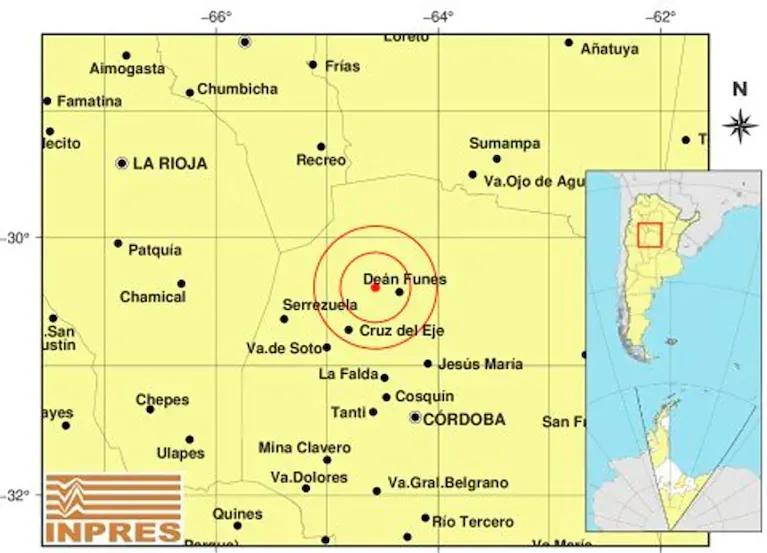
The recent tremor of magnitude 4.4 recorded in Córdoba, Argentina, not only generates immediate concern for the safety of its inhabitants but also raises questions about the country's preparedness and response to natural disasters. This phenomenon, which occurs in a context of increasing economic and social instability, highlights the need to review public policies related to risk management and infrastructure. What does this event mean for the future of prevention policies in Argentina?
🌍 Current situation and context
The earthquake that took place on October 24 at 8:00 PM (local time), with its epicenter 9 km from Deán Funes, has been categorized as one of the most significant in the region in recent years. According to the National Institute of Seismic Prevention (Inpres), a magnitude of 3.9 was reported, which is a relevant event given that Argentina is located in a geologically active zone. In comparison, the last major earthquake recorded in the province was 6.4 in 1944, which resulted in a tragic toll. The population of Córdoba has experienced renewed fears in light of this event, especially considering that tremors can be precursors to more severe earthquakes.
📉 Analysis of causes and factors
The seismic activity in Córdoba is due to its location within the tectonic system known as the "Andean orogenic belt," where tectonic plates constantly interact. However, the lack of adequate preparedness and insufficient investment in earthquake-resistant infrastructure are critical factors that aggravate the potential impact of these natural events. Historically, Argentina has underestimated seismic risks; a study conducted by the National University of Córdoba demonstrated that only 30% of public buildings comply with seismic-resistant regulations. This lack of action reflects a chronic absence of effective public policies regarding risk management.
🌐 International comparison and global impact
Internationally, countries like Chile have implemented rigorous policies to mitigate seismic effects following devastating experiences. For example, after the 27F earthquake in 2010, which reached a magnitude of 8.8, the Chilean government approved structural reforms that include stricter building codes and a national early warning system. According to data from the Chilean National Seismological Center, this has significantly reduced human and economic losses during seismic events. In contrast, Argentina still lacks a systematic and robust approach to confront this recurring natural threat.
🔍 Implications and consequences
The recent tremor has multiple social and economic implications for Argentina. From a social perspective, it increases anxiety among citizens about their personal and family safety; this may translate into a deterioration of collective psychological well-being. From an economic standpoint, each seismic event can be costly; according to previous estimates, a significant earthquake could cause direct damages exceeding $10 billion, affecting not only critical infrastructures but also the country's long-term economic growth.
📈 Strategic perspective and future outlook
Looking ahead, it is imperative that Argentina adopts a proactive approach to its seismic vulnerability. This includes not only improving building regulations but also developing educational programs on risk management for the civilian population. Opportunities are present; investing in resilient infrastructure could generate employment and strengthen public trust in government institutions. However, the risk remains if action is not taken; ignoring these events may result in avoidable tragedies and unsustainable economic costs.
In conclusion, the recent tremor is a urgent reminder of the state's responsibilities in the face of natural disasters. To move towards a safer and more resilient society, it is crucial to establish clear policies based on scientific data and successful international experiences.
Comments