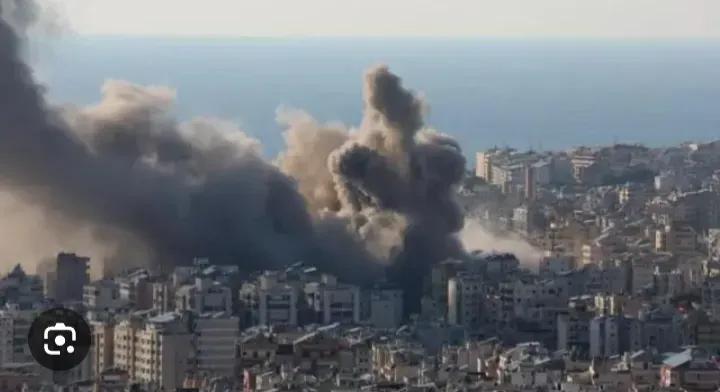
After nearly three months of war, the military incursion that the United States envisioned as an easy task, similar to the arrest of Nicolás Maduro in Venezuela, has turned into a prolonged conflict that demonstrates just how much the United States underestimated Iran's military capabilities.
In a conflict that has brought enormous repercussions for the region - from the closure of the Strait of Hormuz to the damage done to oil refineries throughout the Gulf - the regional reconfiguration, the rise and fall of relevant actors, as well as the impact on domestic political dynamics in the United States, give this conflict an international character capable of altering power relations in the future.
The case of Pakistan seems to perfectly illustrate the new balance of power in the region. The only Muslim-majority country with nuclear power, this South Asian nation intervened with the President of the United States to consider its ultimatum to Iran and grant a 15-day extension to open the Strait of Hormuz and end the war.
The relative power that Pakistan has gained, a previously almost irrelevant actor in the power dynamics of the Middle East, reinforces its role as an intermediary between the West and Muslim countries.
The United Arab Emirates, for their part, have become quite blurred in their attempt to become mediators between the United States and Iran. For a country too prone to support and fuel intra-state conflicts in Africa, the UAE has considerably lost its firepower in a region where other Gulf countries, such as Qatar and Saudi Arabia, have gained more prominence.
The case of China still seems to be a mystery. Although it offered Iran the shipment of defense systems, China's tradition of foreign policy, which tends to refrain from interfering in external conflicts, leads us to think that the Asian giant will occupy a secondary but relevant role in the future.
Finally, the case of the United States seems to be the most unpredictable of all. With the rise of Trump, the intervention - or not - of the United States in the region remains an enigma. Although the President of the United States announced a ceasefire, his decision to punish all those ships attempting to cross the Strait of Hormuz demonstrates the uncertainty surrounding U.S. foreign policy at this time.
In short, the internationalization of the conflict in the Middle East serves as an example of the development of the international system in the future. The rise of China and the role of the United States in the future are subjects observed in this regional conflict but can be extrapolated to
global level.

Comments