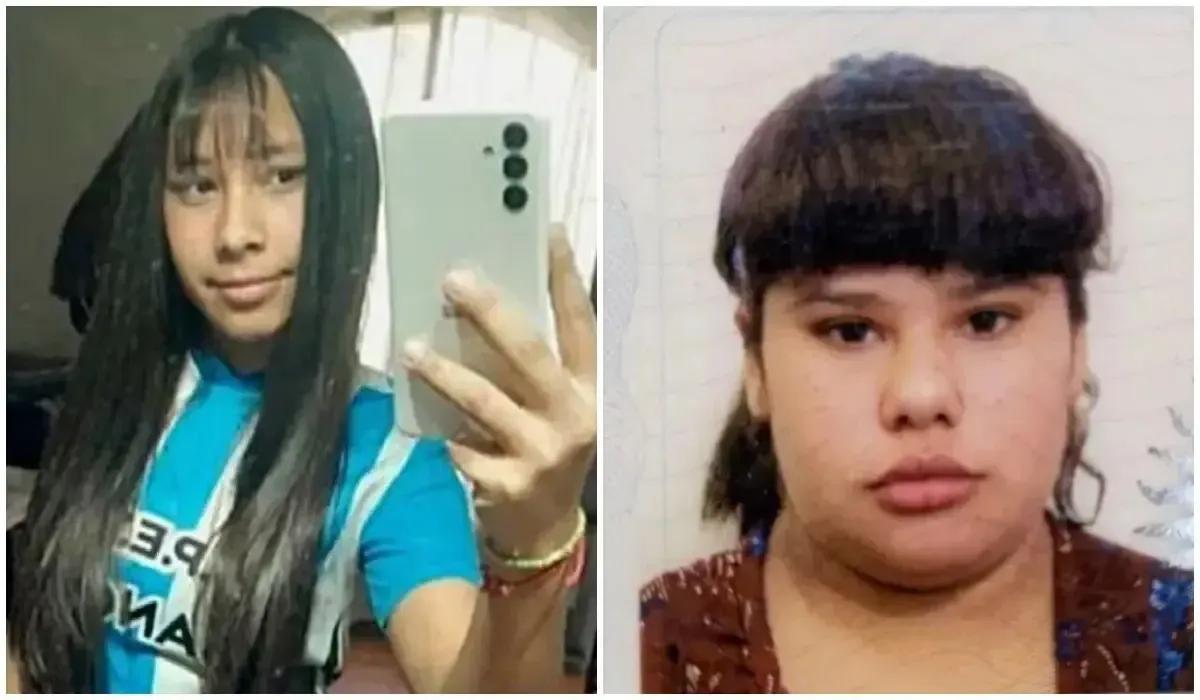
Agostina was 14 years old.
When investigators found her remains in an open field in Ampliación Ferreyra, south of the city of Córdoba, the news had already spread for a week to every corner of Argentina. Her photograph had been circulating for days on cell phones, news portals, and social media. Thousands of people knew her name. Thousands of people had shared the search. Thousands of people had repeated the same phrase that accompanies every disappearance of a girl: “I hope she shows up.”
But Agostina did not show up.
What showed up were human remains.
Remains that needed to be identified by experts. Remains that forced a family to confront one of the most devastating scenes a society can produce. Remains that ended a week of uncertainty and began another stage, perhaps even more painful: understanding that a 14-year-old girl had been murdered.
While Córdoba tried to process the horror, while television channels broadcast live from the courts and journalistic teams tracked every move of the investigation, another dead teenager barely occupied a few scattered lines in local media from Misiones. Her name was Dulce Beatriz Candia. She was 17 years old. She had disappeared on May 17 in Eldorado and was found dead eleven days later in an abandoned building. The autopsy confirmed that she had been murdered by mechanical asphyxia.
Two teenagers.
Two provinces.
Two destroyed families.
Two judicial investigations.
Two communities faced with the same question.
How did we get here?
The question does not only point to the perpetrators of the crimes. Justice must establish criminal responsibilities, reconstruct the facts, and determine who participated. The question is prior. Much prior. It has to do with the conditions that made it possible for two teenagers to disappear and end up murdered just days apart in the same country.
Because the problem of observing these stories only as police cases reduces them to the logic of the file. The discussion is then limited to security cameras, cell phones, the routes of the suspects, raids, autopsies, and forensic examinations. We discuss how they died. We discuss who killed them. We discuss where their bodies were. But rarely do we discuss how they were living before they disappeared.
And perhaps therein lies the most uncomfortable part of this whole story.
Because no teenager appears murdered overnight.
Death occurs within hours.
Vulnerability is often built over years.
In Agostina's case, the investigation exposed a web of complex ties, unequal relationships, and adults orbiting around a 14-year-old girl. In Dulce's case, neighbors of Eldorado publicly reported that the teenager was going through situations of extreme fragility known to a large part of the community. None of these observations explains a crime. Much less justifies it. But they do compel us to look at something that often remains out of frame: the risk conditions that precede tragedies.
Because there is a huge difference between explaining and holding accountable.
Explaining means trying to understand what went wrong.
Holding accountable means seeking culprits.
And in Argentina, there is an almost automatic tendency each time a teenage girl is a victim of extreme violence: to first look for the family’s mistakes.
Where was the mother?
Why did she go out alone?
Why didn’t anyone accompany her?
Why didn’t they keep an eye on her?
These are understandable questions. They are also insufficient.
They are because they stem from an impossible fantasy: the idea that the safety of a teenager depends exclusively on the surveillance capability of their parents.
No family can control every conversation, every message, every movement, and every connection of a teenager. No mother can stay awake twenty-four hours. No father can anticipate every risk. If the protection of children and teenagers depended exclusively on that, there would be no protection systems, schools, childhood agencies, mental health teams, or public policies. The very existence of those institutions demonstrates that the protection of children is a shared responsibility.
However, something seems to systematically break when it comes to teenagers living in contexts of vulnerability.
What happens then is a perverse phenomenon: vulnerability becomes so commonplace that it stops surprising.
A teenager who spends too much time on the street.
A teenager who associates with adults.
A teenager surrounded by problematic consumption.
A teenager going through family conflicts.
A teenager who disappears for hours.
A teenager who stops responding to messages.
All of that starts to be perceived as part of the landscape.
And when vulnerability becomes a landscape, alarms stop sounding.
Until one day a body shows up.
Only then does urgency begin.
Only then do extraordinary resources appear.
Only then do television crews arrive.
Only then do officials arrive.
Only then do press conferences happen.
Only then does a teenager become a priority.
There is a scene that occurred during the investigation into Agostina's murder that brutally summarizes this contradiction. At the press conference following the discovery of the remains, a significant part of the institutional speech was dedicated to highlighting the work done to locate the body. They spoke of the technology used. Of the analysis of cameras. Of cell phones. Of the police deployment. Of the work of trained dogs.
And all of that was true.
None of that was false.
But there was something deeply disturbing in the contrast.
Because while the effectiveness of the operation was being described, a 14-year-old girl lay dead.
Because a society can feel proud of many things, but it should never feel satisfied about having found the remains of a murdered teenager in time.
Finding a body is not a victory.
It is the confirmation of a defeat.
The defeat of a girl.
The defeat of a family.
The defeat of a community.
And, at some point, also the defeat of all the institutions that exist precisely to prevent a story from ending that way.
The most painful thing is that Agostina's case did not happen in isolation.
While millions of Argentines knew her name, Dulce Candia was disappearing and was found dead under equally shocking circumstances. The difference was the attention.
And that difference should also worry us.
Because access to visibility has become a form of inequality.
There are disappearances that manage to cross provincial borders and become national news.
And there are disappearances that remain confined to the local sphere until it is already too late.
There are families that receive permanent coverage.
And there are families that must plead for someone to publish a photograph.
There are victims that mobilize extraordinary resources.
And others whose absence seems to dissolve into the everyday noise.
The question that Agostina and Dulce leave is not only what kind of men are capable of murdering teenagers.
The question is what kind of society observes these tragedies repeating over and over without seriously reviewing the conditions that make them possible.
Because no democracy can be satisfied with resolving homicides.
Its obligation is to prevent them.
And when two teenagers show up murdered in the same week, when one of them is only 14 years old, when communities report prior vulnerabilities, when the public response continues to come after the disappearance and not before, then the problem stops belonging exclusively to the courts.
It becomes a collective problem.
A problem that speaks of childhood, inequality, violence, abandonment, weakened institutions, and a worrying inability to detect risks before they turn into tragedies.
Agostina Vega and Dulce Candia can no longer be protected. That possibility ended the day they were murdered. What remains now is the judicial investigation, the search for responsibilities, and the demand for justice.
But if their names are to mean something more than a file, if their deaths are to leave any lesson amid the horror, perhaps the discussion should start somewhere else. Not with how they were found. Not with who arrived first at the open field. Not with which dog marked the right territory.
The discussion should start much earlier.
At the exact moment when a teenager begins to become vulnerable and no one seems to see it.
Because the true failure of a society never occurs when it finds a dead girl.
It occurs when it was unable to protect her while she was alive.
Jazmín Abdala | Journalism student.

Comments