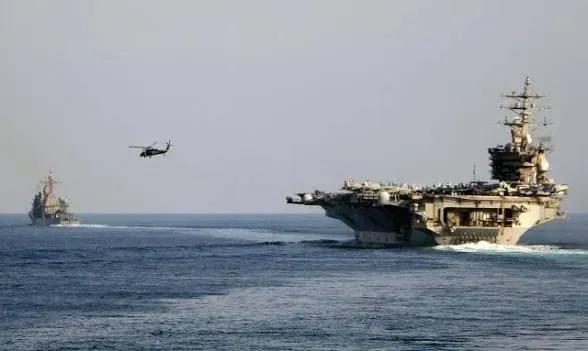
Since Saturday, February 28, when the world awoke to the news of a new coordinated attack between the United States and Israel against Iranian targets, both geopolitics and the international economy have suffered a new shock. Through Operation "Epic Fury" for the Americans or Lion's Roar for the Israelis, both countries carried out a series of attacks against air defenses, military bases, and infrastructure linked to the Iranian nuclear program, as well as eliminating a significant part of the Iranian political and military leadership, including Ali Khamenei, Supreme Leader of Iran, Abdolrahim Mousavi, Chief of Staff of the Iranian Armed Forces, and Azis Nasirzadeh, Minister of Defense, among others.
Initial Reactions
The consequences of this series of attacks, which have continued to date, have not only generated a shock in the geopolitical sphere but have also had effects on the global economy. In response to this uncertainty, European and Asian markets, along with stocks around the world, have recorded significant losses, although they have been slowly recovering, yet have not returned to the values prior to 28F.
As for energy matters, the price of crude oil has surpassed US$ 100, reaching US$ 120. This exponentially worsens the European energy situation, which has been deteriorating since the start of the Russian-Ukrainian war in February 2022, with a critical point expected at the end of this year when Russian gas import contracts are not renewed, which the Kremlin has already threatened to cut preemptively.
Argentina: its position, risks, and possibilities
On the same day, February 28, through a statement from the Office of the President of the Argentine Republic (OPRA), the Argentine government celebrated the joint operation carried out by the United States and Israel. This is not the first time OPRA has expressed itself regarding this conflict, as in June 2025, it condemned the appointment of Ahmad Vahidi, one of the main suspects in the attack on the Argentine Israelite Mutual Association (AMIA) on July 18, 1994, as Commander of the Islamic Revolutionary Guard. In response to Argentina's support for Israeli and U.S. actions, in July 2025, Iran added the country to its "list of enemies" through its diplomatic mission to the United Nations.
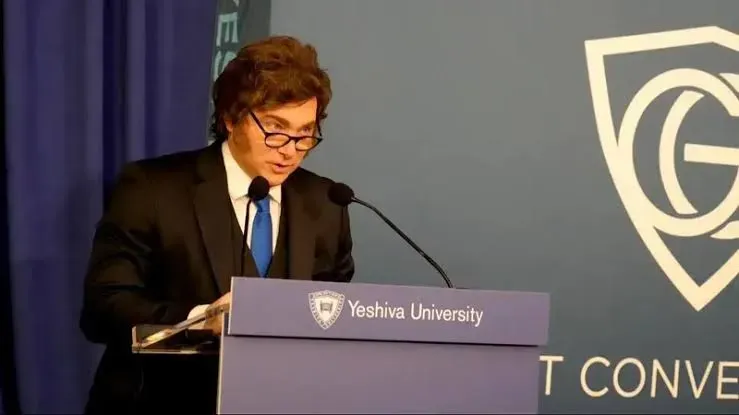
In response to the offensive carried out in late February, President Milei repeated the actions taken in June 2025, stating at a conference in the United States that "Iran is an enemy of the country," which has raised fears of possible retaliation from the Iranian regime, with fresh memories of the attacks in the 1990s: the aforementioned AMIA attack and the attack on the Israeli embassy on March 17, 1992.
However, the analysis would be poor if we only limit ourselves to discussing the potential retaliatory actions from Iran and do not observe the commercial opportunities that arise for the country in this Middle Eastern context, alongside the prolongation of the Russian-Ukrainian conflict.
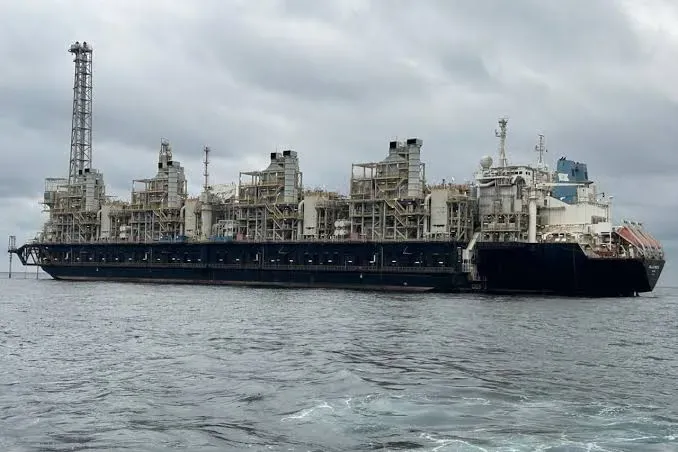
First, Argentina is presented with a great opportunity in the export of Liquefied Natural Gas (LNG), as during Iran's response in Middle Eastern countries, facilities of the Qatari state company QatarEnergy, the world's largest LNG producer, were damaged, which anticipated that "due to force majeure it would not be able to comply with its contracts". In this context, Argentina, which reached an agreement with Italy at the end of last year, and recently closed the largest LNG export agreement in its history with the company SEFE, through the Southern Energy consortium, which includes PanAmerican Energy, YPF, Pampa Energía, Harbour Energy, and Solar Energy, for 2 million tons annually for 8 years, from late 2027 to 2035, could generate up to US$ 7 billion. This agreement confirms Argentina's positioning as an international LNG supplier.
Secondly, a window opens for one of Argentina's strong points in its trade balance: soybeans. In recent weeks, the price of a ton of soy has not been unaffected by the volatility generated by the war in the Middle East, surpassing a historic ceiling in the last 2 years, reaching over US$ 450 per ton. This revaluation, combined with the internal decision of the government to reduce export taxes, commonly known as "retentions," could create a highly favorable scenario for producers to liquidate and generate benefits both for themselves and for the state and its treasury.
Once again, in adverse scenarios, the country has the possibility to take advantage of voids created by external issues unrelated to itself. Undoubtedly, the national government must stay alert to the consequences of the conflict itself and to the potential retaliation of the Iranian regime. However, that cannot prevent Argentina from capitalizing on the opportunities that knock on its door, which can improve both the state’s coffers and its position when carrying out strategic negotiations, because, as the realist school suggests, the greater the strategic weight of a state, the greater its capacity to impose conditions.

Comments