Methods of Japanese Charting + On-Chain Indicators.
A) Introduction.
B) History.
C) New Way of Analyzing Bitcoin.
D) Final Clarifications.
A) Introduction.
In this note, I show, through empirical examples, how the methods of Japanese charting, with over 100 years of history and part of the body of knowledge of CMT, are applied for the first time to on-chain indicators to conduct market analysis on Bitcoin.
The gross price was the main type of data to which these methods were applied. Today, in Bitcoin (the first digital commodity in history), the range of possibilities is much larger, allowing these methods to be applied to a broader set of organic market data (on-chain indicators) beyond the gross price.
B) History.
1) Japanese Charting Methods:
In ancient Japan, price representations were drawn by hand. Traders had to accurately and correctly represent the price of a commodity (rice, at that time) to make decisions with real consequences; errors implied financial losses. Strategies linked to rice and market factors of that time were also used. All of this began at the Dōjima Rice Exchange in Osaka, considered one of the first organized futures markets in history.
The first person who is said to have conducted this type of analysis was Munehisa Homma. He is attributed writings from the 18th century on market psychology, considered among the first works of its kind. He later became a financial advisor to the Japanese government and was honored with the title of samurai for his contributions.
These methods continued to develop and be used in Japan for a long time before being shared with the Western world, as they were considered confidential. Only in 1986 was the first book on the subject published in English: “The Japanese Chart of Charts” by Seiki Shimizu, translated by Gregory S. Nicholson; in other words, this body of knowledge has formally existed in the West for only 40 years.
Shortly thereafter, Steve Nison, who was one of the first to receive the CMT designation, established himself as a key figure in the introduction and formalization of charting in the West, specifically on Wall Street, starting in 1991. He wrote several books, including the widely known “Japanese Candlestick Charting Techniques.” He is also a technical analysis expert with over 30 years of practical experience. Steve's client list includes Fidelity, J.P. Morgan, Goldman Sachs, and Morgan Stanley. Additionally, his work has been featured in The Wall Street Journal, Worth Magazine, Institutional Investor, and Barron’s.
Prior to Nison, prices were represented in bar format and previously in lines. He himself compared Japanese candles with these formats as color TV vs. black and white TV.
In this sense, it is important to understand that charting improves the visual analysis of market data. For example, traditional candlesticks show the internal structure of each period with bodies/wicks (OHLC - two-dimensional: time and value), Heikin-Ashi smoothes out price noise, making trends/reversals more visible, and Renko (one-dimensional) completely removes time from the equation, focusing solely on value changes. Each of these methods provides a different type of visual market analysis and will be applied to on-chain market indicators of Bitcoin.
It should be noted that there are more methods beyond these three I mentioned.
2) CMT Association.
The CMT is a nonprofit professional organization that certifies market technical analysts globally. It is the highest institutional authority on the discipline, considered the highest standard in the field.
All the trading material shared in this note comes from authors whose work has been evaluated and promoted by the CMT.
The association was founded in 1973 by Ralph Acampora, John Brooks, and John Greeley, stemming from informal meetings of technical analysts that began in New York in 1967. Over the following decades, Acampora and the association worked to legitimize the discipline, a goal they finally achieved by obtaining recognition from FINRA and the SEC (U.S.).
While they promoted pure technical analysis, Acampora himself supports what is called "fusion analysis," the integration of technical and fundamental approaches, as the most comprehensive way to analyze the markets. In the Bitcoin ecosystem, its on-chain data is interpreted by the industry as fundamental data, and Japanese charting is directly linked to technical analysis, so what I will show in the following analyses is a type of "fusion analysis" on Bitcoin.
C) New Way of Analyzing Bitcoin.
Technical considerations:
• The analyses will focus on price, supply, demand, and Bitcoin holders.
• I selected 6 on-chain indicators: 1) Realized Price UTXO (1d-1s), 2) NUPL - Net Unrealized Profit/Loss of Holders, 3) Apparent Demand Growth, 4) Fund Holdings (Wall Street ETFs), 5) Realized Price UTXO (1s-1m), and 6) Realized Price UTXO (1m-3m), and I show them with 3 methods of Japanese charting: 1) Renko, 2) Traditional Candlesticks, and 3) Heikin-Ashi Inspired Candlesticks.
• Most of these indicators are commonly represented in line or area format of the same color and on a daily basis.
• All price values seen highlighted in yellow correspond to the market price of Bitcoin (closes or highs), NOT values of the indicators. Specifically, what you are about to see are price annotations above the on-chain market indicators, to provide a complete analysis of BTC.
• This work is public and auditable.
• I learned to develop my own charts with the assistance of Claude and use the CryptoQuant database.
• Finally, beyond the charts presented, I show different types of analyses I conducted in English in CQ, combining price action and on-chain indicators.
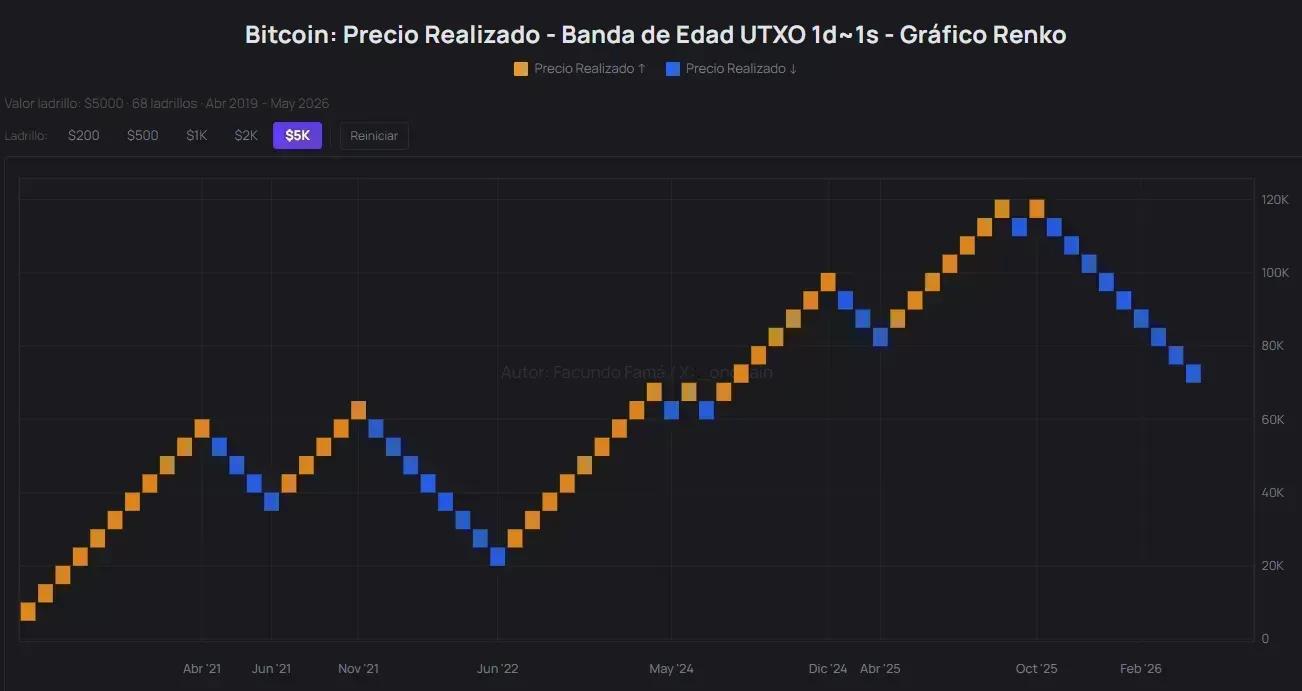
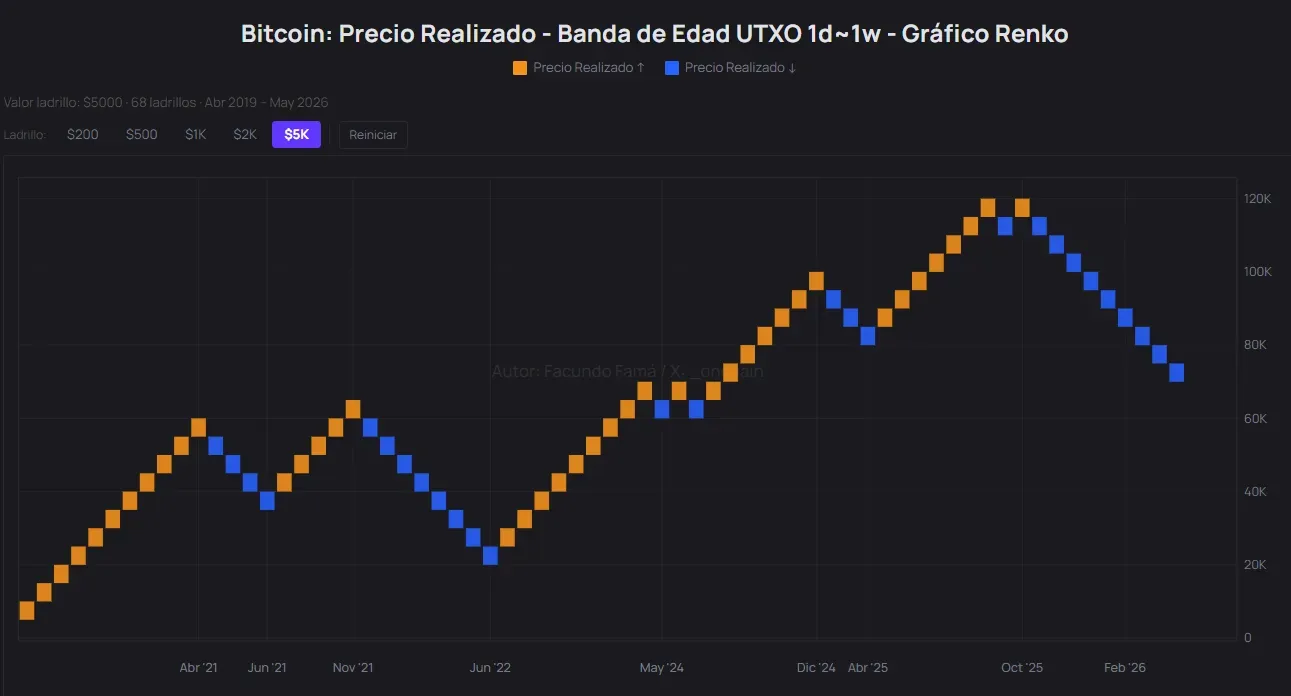
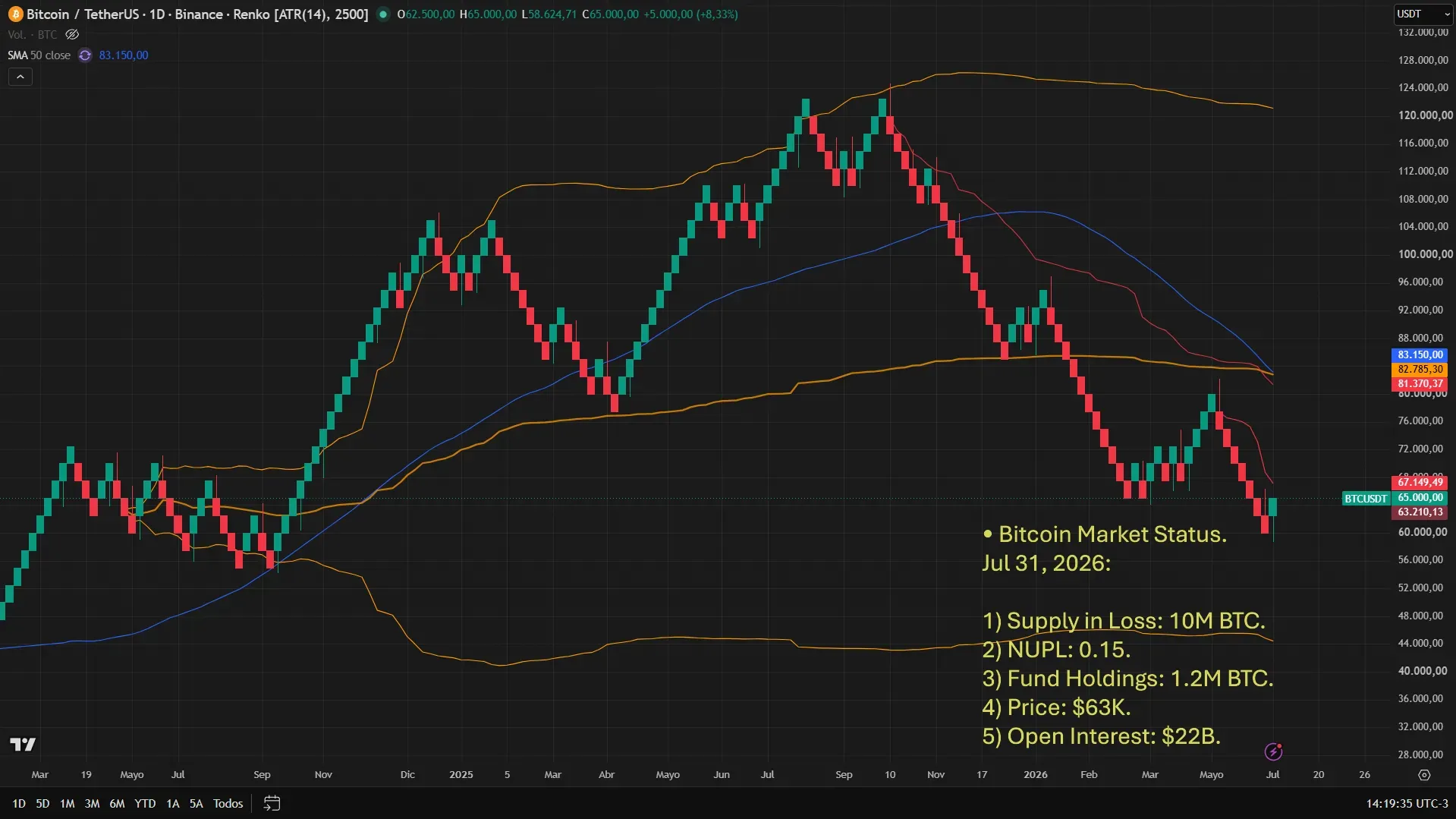
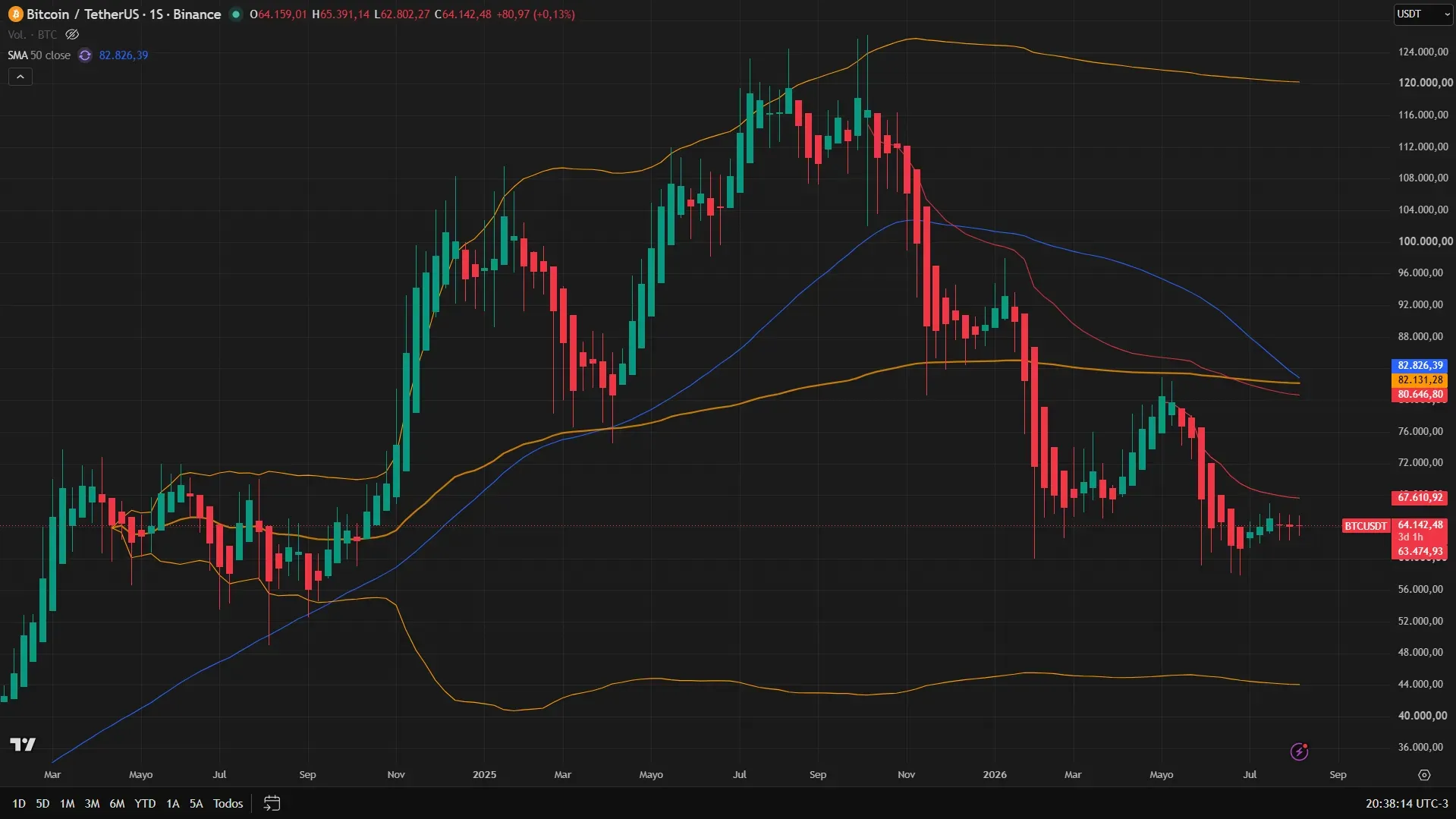
1) 1st Realized Price - UTXO. Renko.
These are average smoothed prices with on-chain data derived from the gross market price. They can be comparable to traditional moving averages (SMA50).
Market history, 2020-2026.
This is how the price of Bitcoin looks when analyzing it with on-chain data and Renko, filtering the noise of the market to see the prevailing trend:
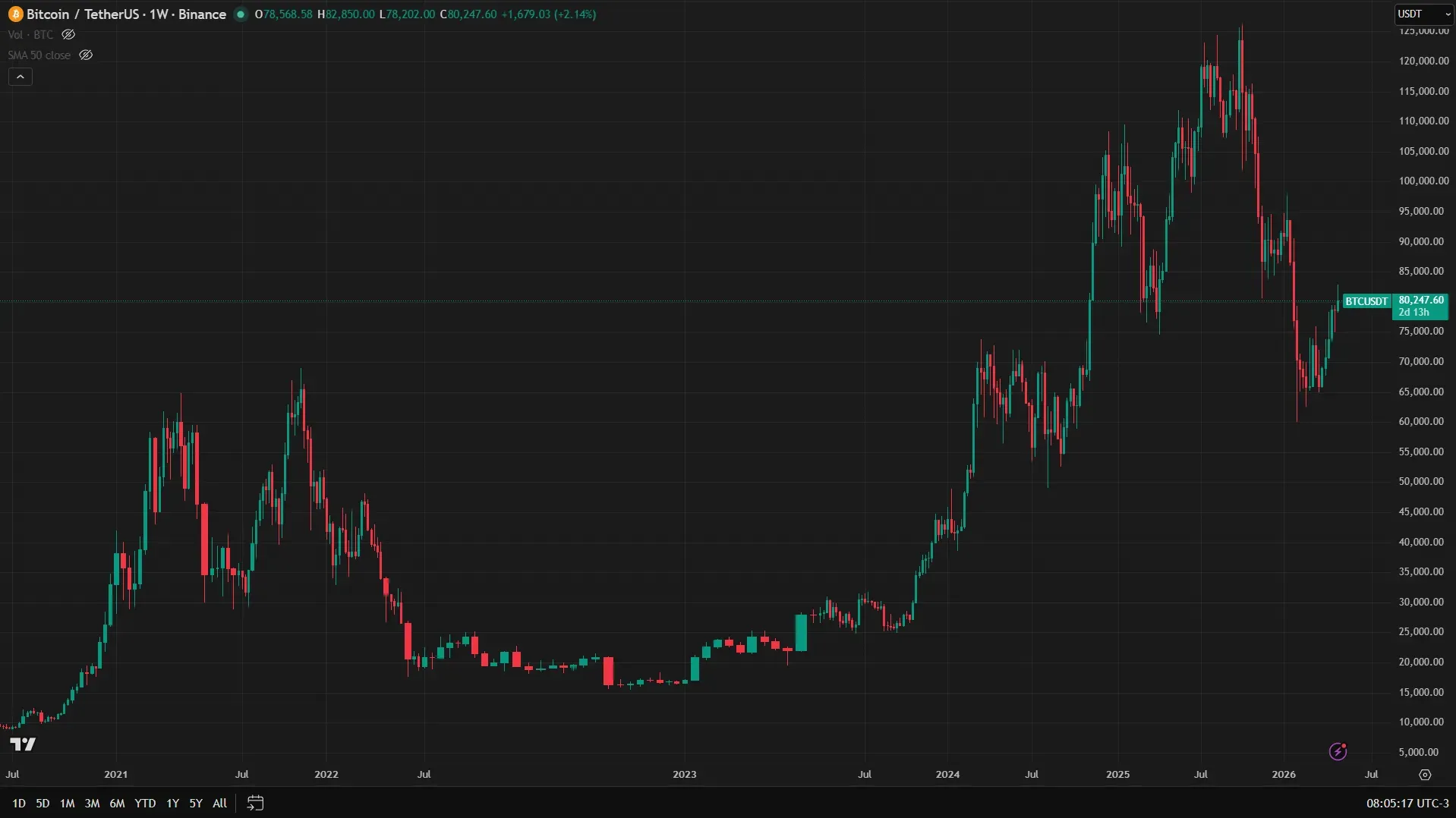
This is how the normal market price of Bitcoin looks with Japanese candles, during the same period, without filtering out the noise with on-chain data and Renko:
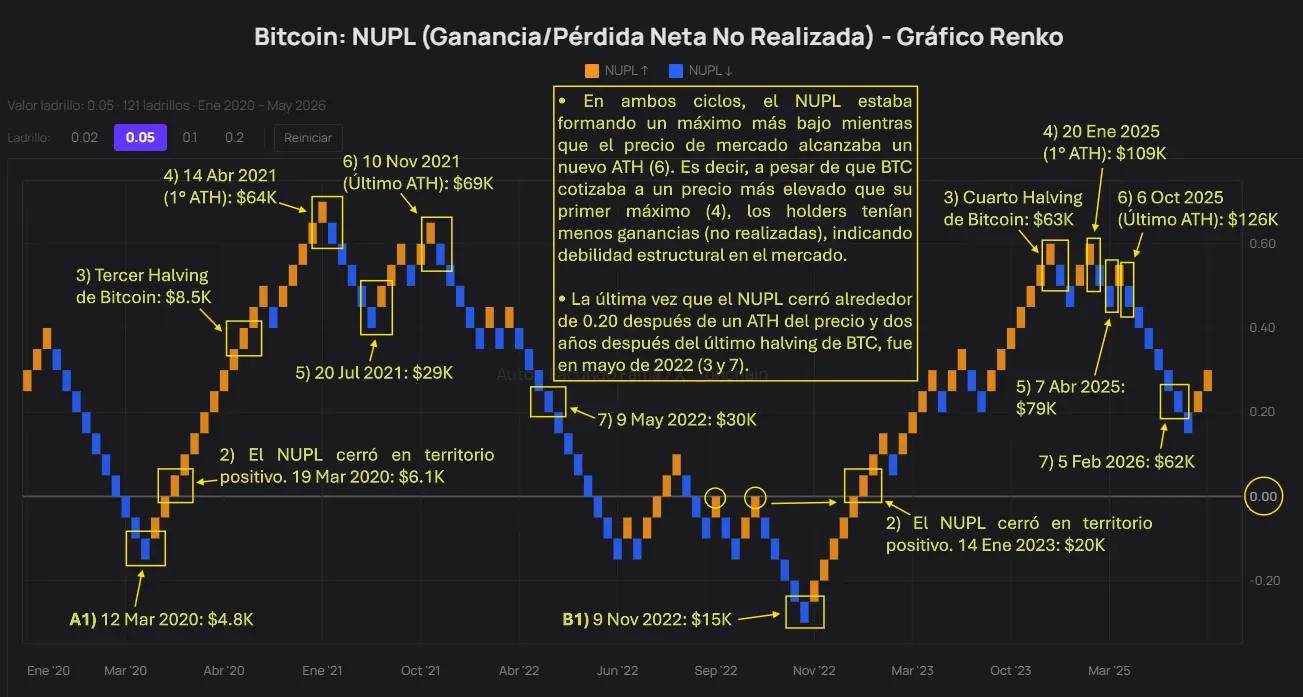
2) NUPL - Net Unrealized Profit/Loss of Holders. Renko.
NUPL measures how much unrealized (unrealized, not sold) profit or loss holders of Bitcoin have.
Market history, 2020-2026:
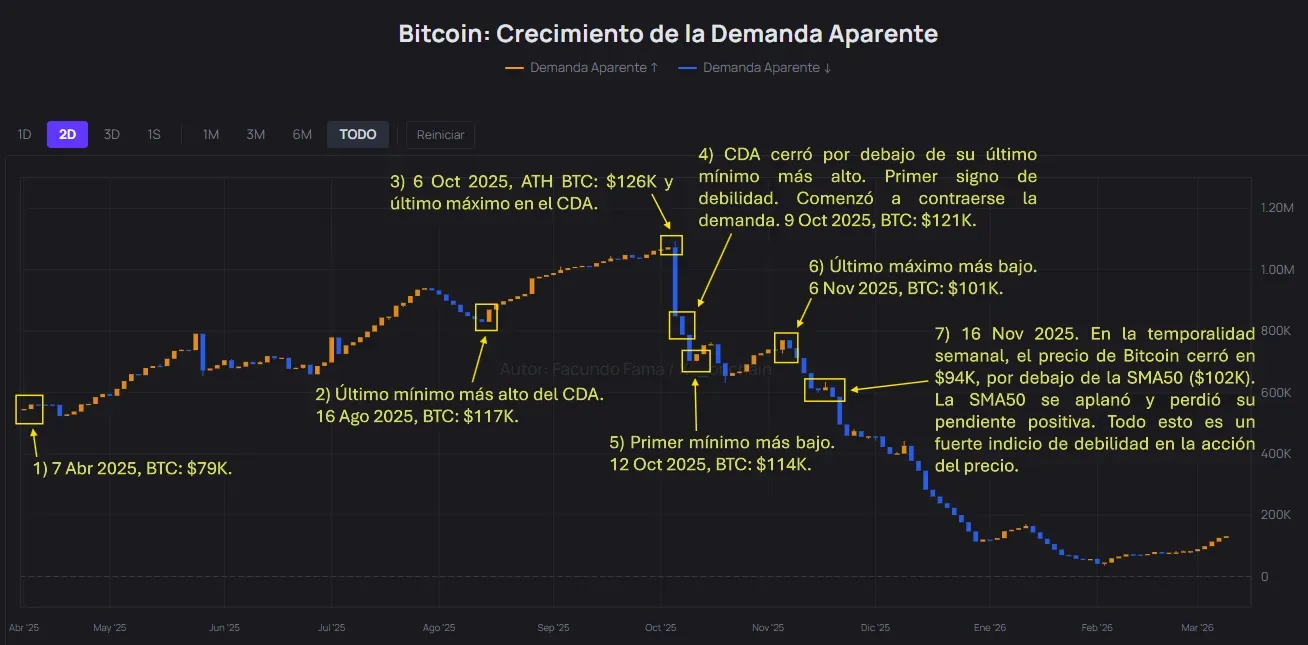
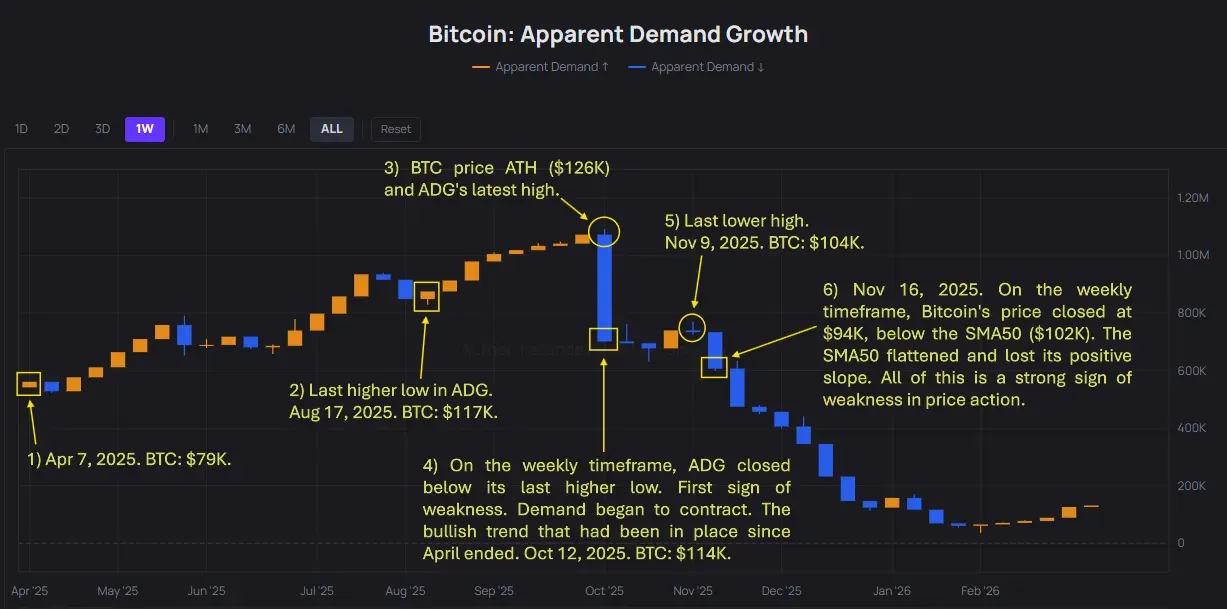
3) Apparent Demand Growth. Traditional Candlesticks.
This is an on-chain indicator that estimates the demand for Bitcoin in the market.
Market history, 2025-2026:
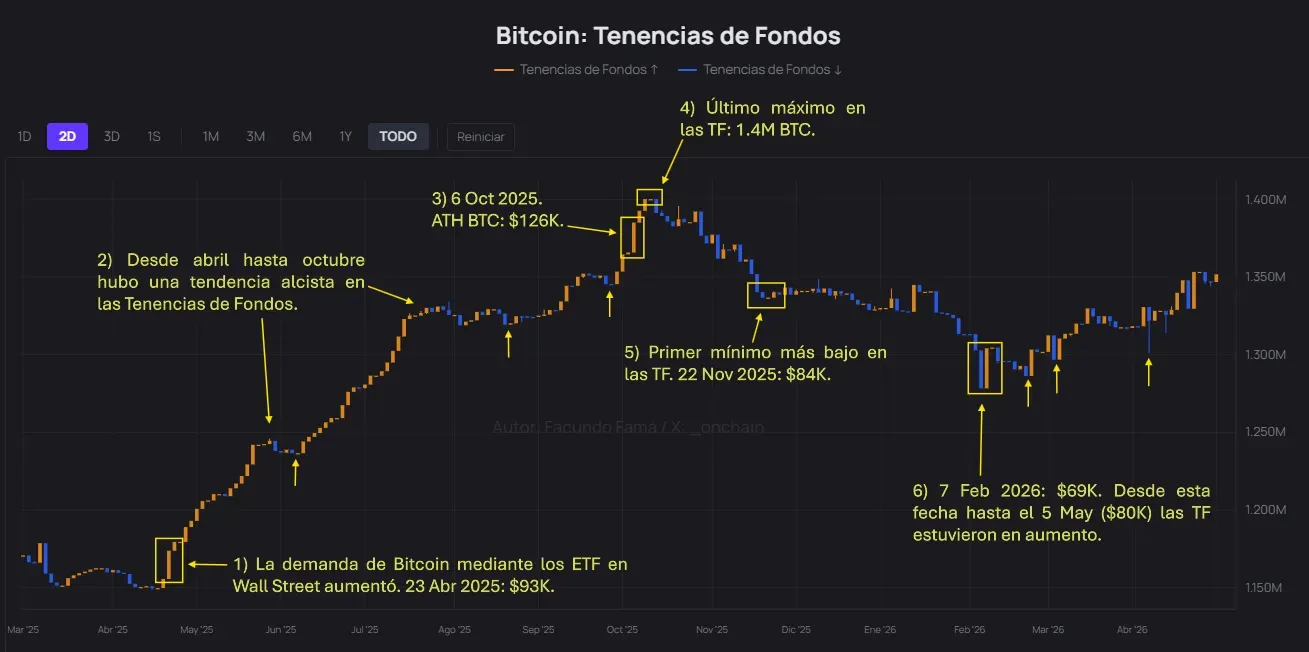
4) Fund Holdings (Wall Street ETFs). Traditional Candlesticks.
Amount of BTC held by Bitcoin ETFs trading on Wall Street.
Market history, 2025-2026:
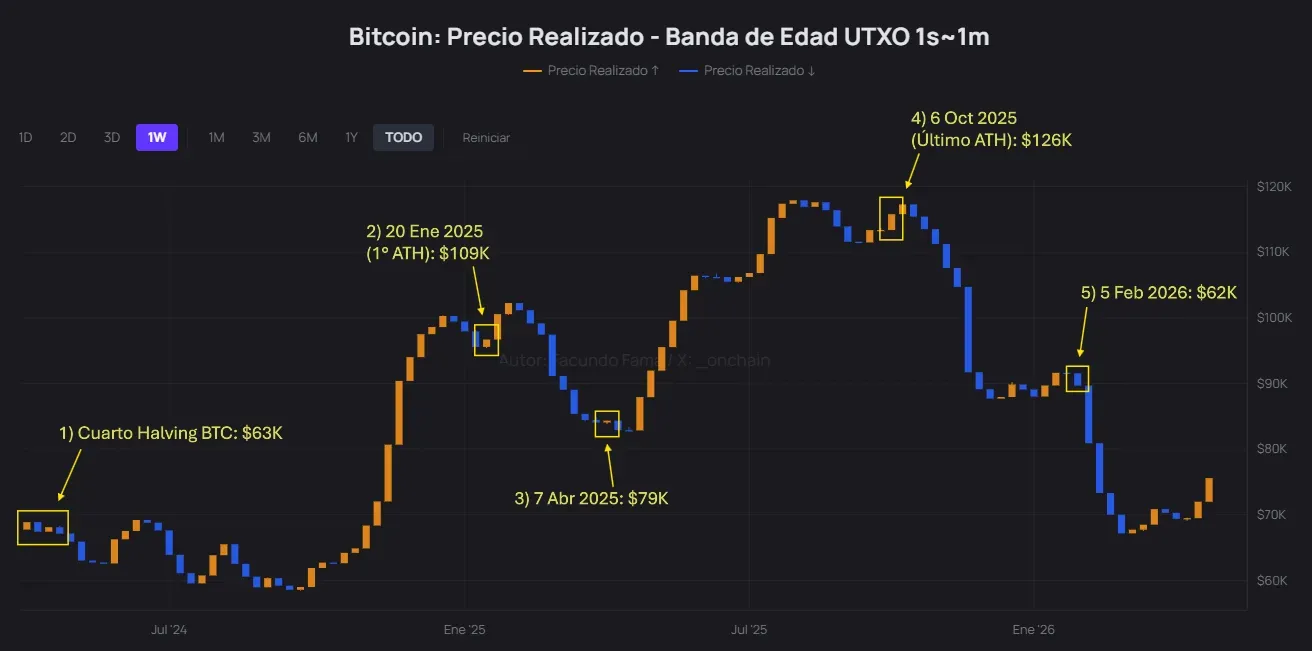
5) 2nd Realized Price - UTXO. Heikin-Ashi Inspired Candlesticks.
Market history, 2024-2026.
This is how the market price of Bitcoin looks when smoothed with on-chain data and Heikin-Ashi inspired candlesticks to see the prevailing trend:
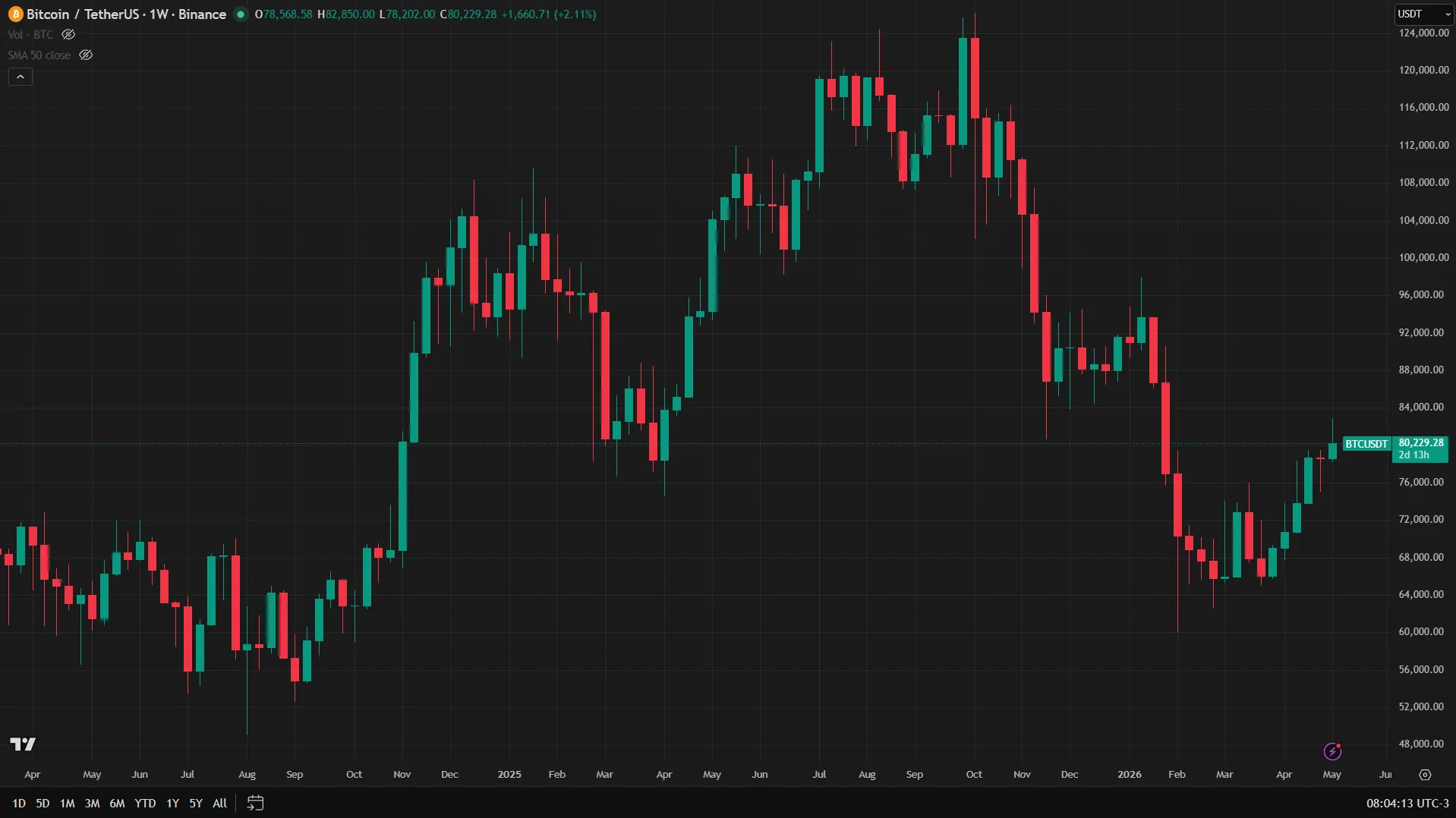
This is how the normal market price of Bitcoin looks with traditional candles, during the same period, without being smoothed by on-chain data and Heikin-Ashi inspired candles:
6) Examples of 2 analyses in English that I conducted before combining on-chain indicators with Japanese charting methods.
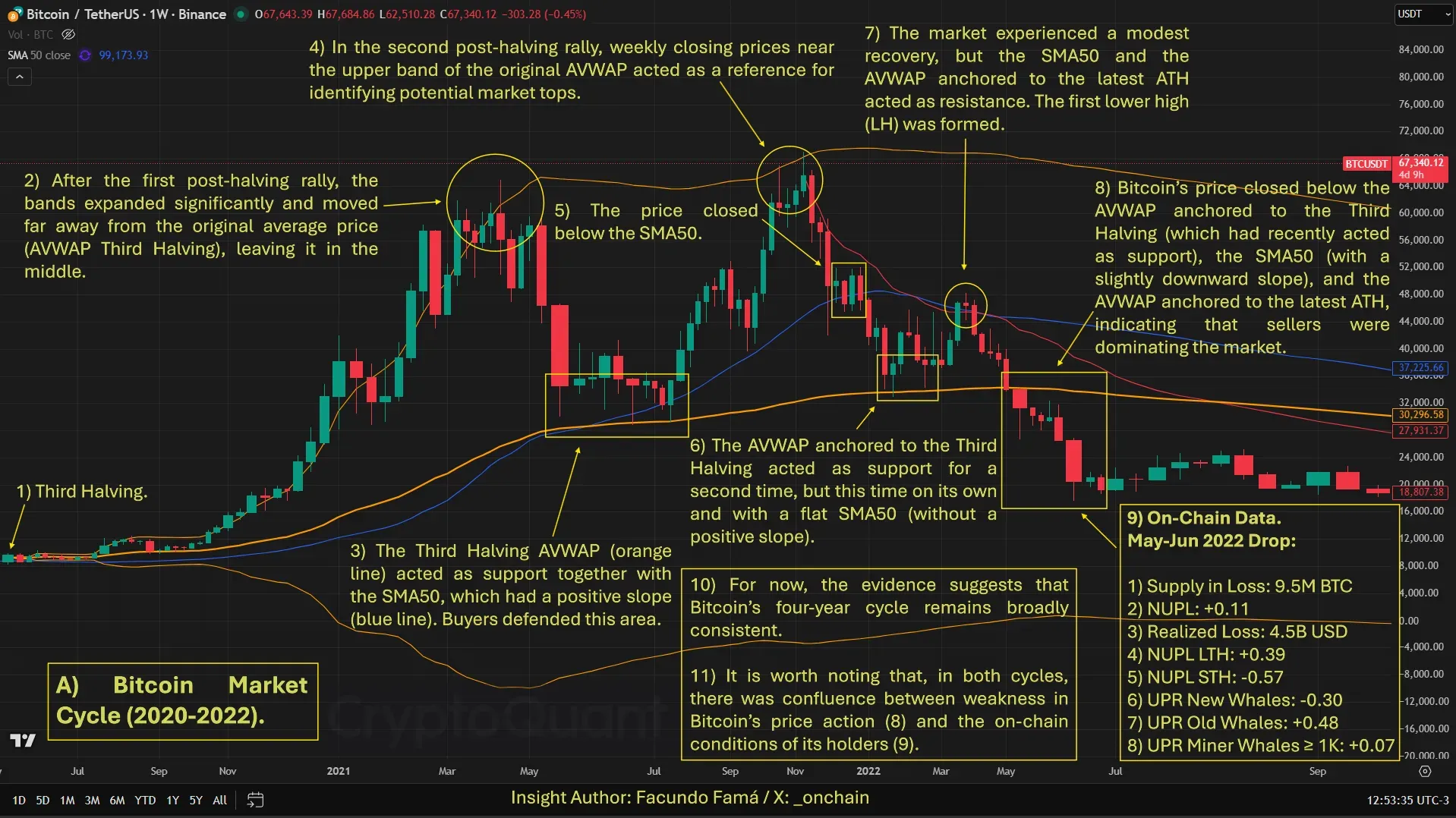
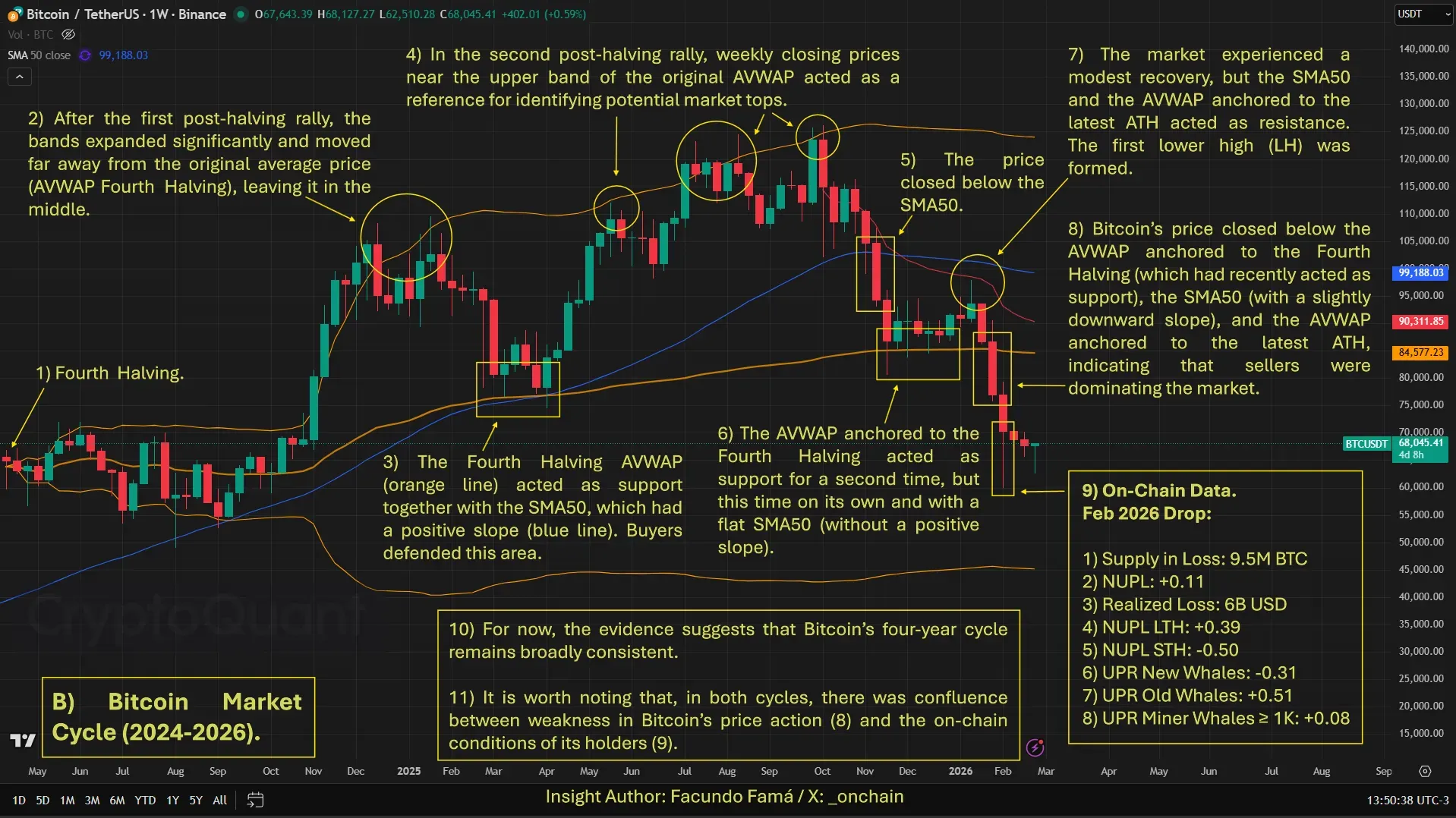
A) I compared the Bitcoin market cycles of 2020-2022 vs. 2024-2026.
I used: Anchored VWAPs of the Third and Fourth Halvings of BTC (bands set with the same deviation - 2.1), Anchored VWAPs of the ATHs of 2021 and 2025, SMA50 (weekly temporal), Realized Loss - USD, NUPL, Supply in Loss, UPR of New and Old Whales, UPR of Mining Whales, NUPL of LTH and STH.
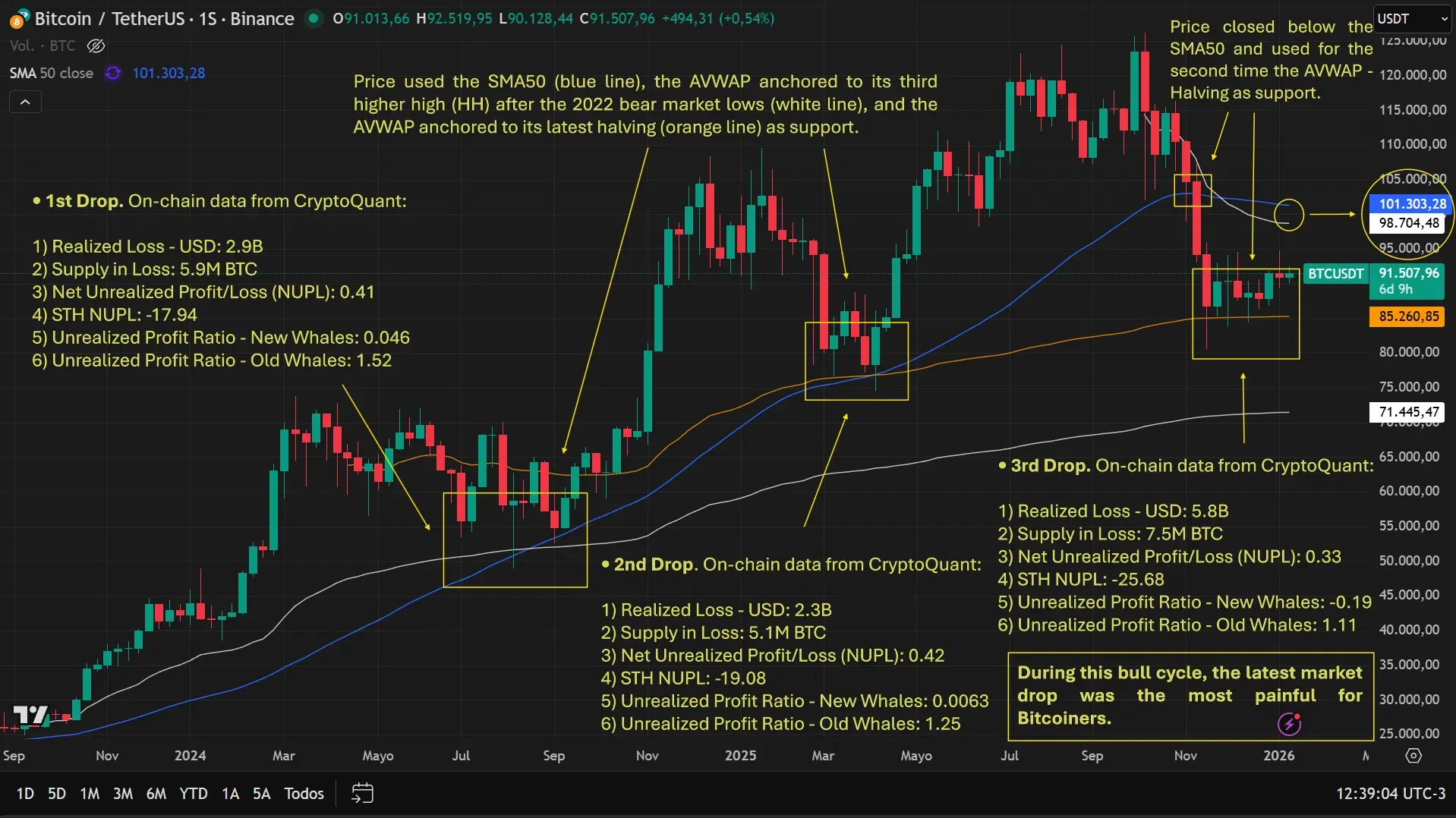
B) I compared the 3 market drops, to see which was the most painful for Bitcoin holders.
I used: Realized Loss - USD, Supply in Loss, NUPL, NUPL of STH and UPR of New and Old Whales.
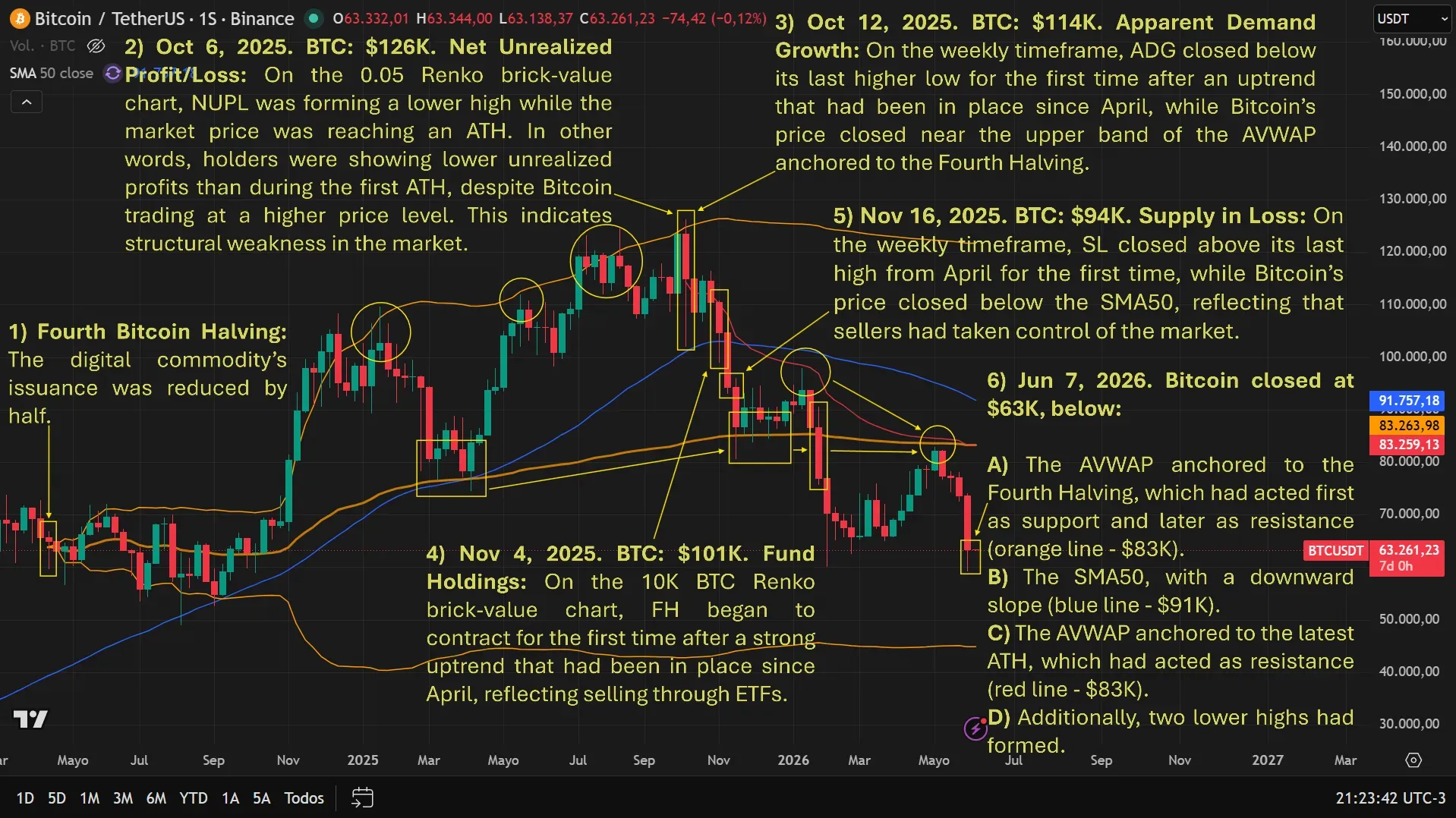
7) On the other hand, I present the observations derived from the on-chain indicators incorporated in chronological order (not all are in this article; if you want to see the rest, I invite you to check the technical dashboard that I share at the end of the note). This section was added in June 2026 to continue with images 7 A and B:
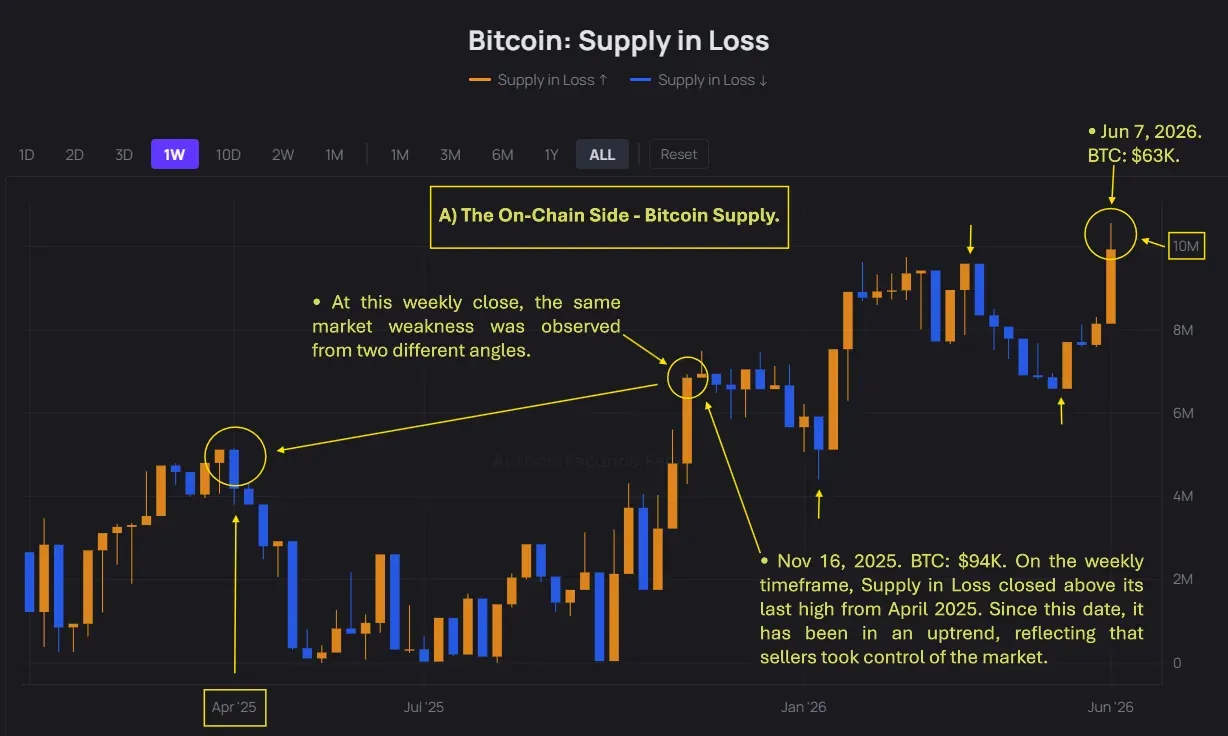
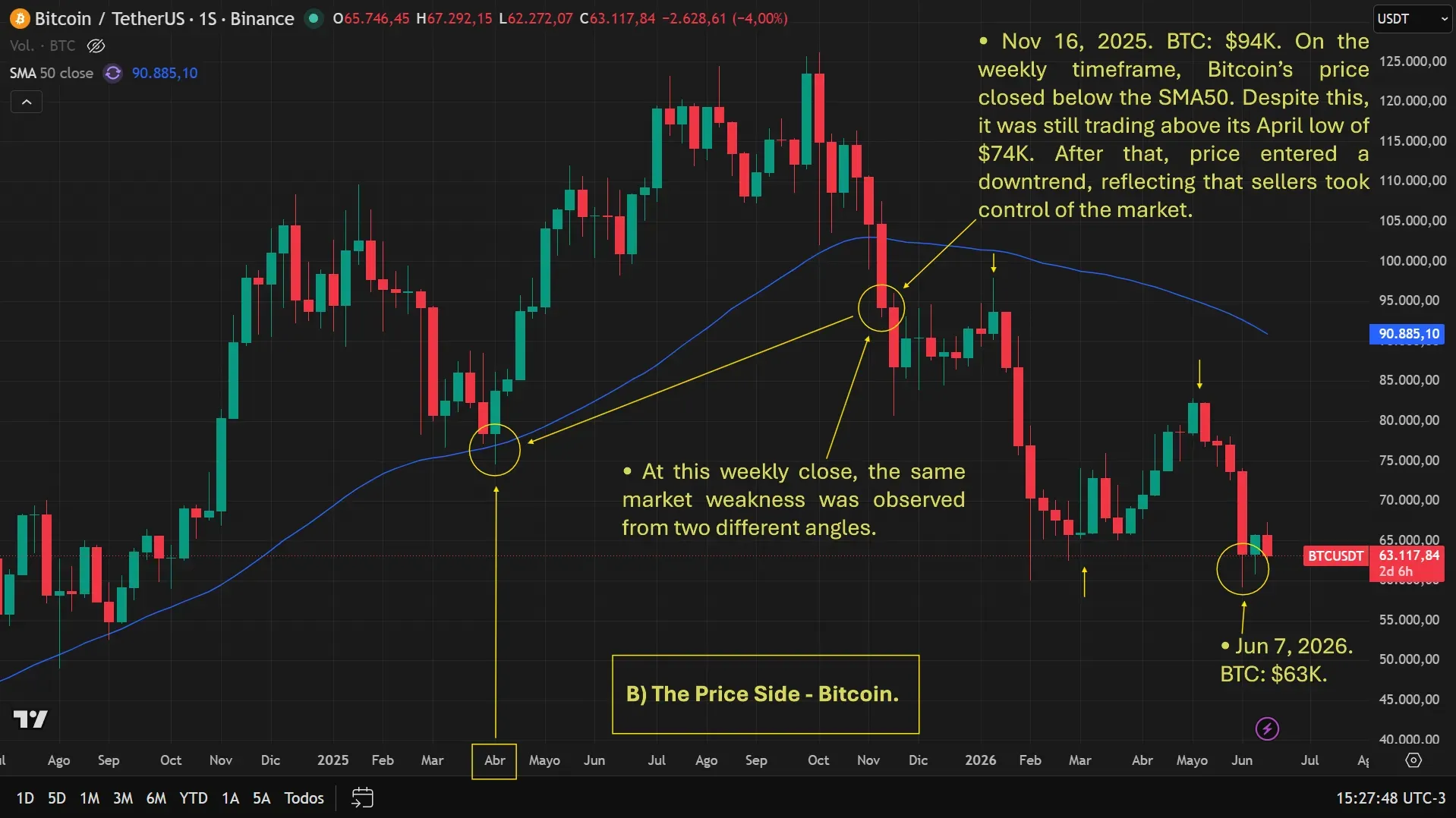
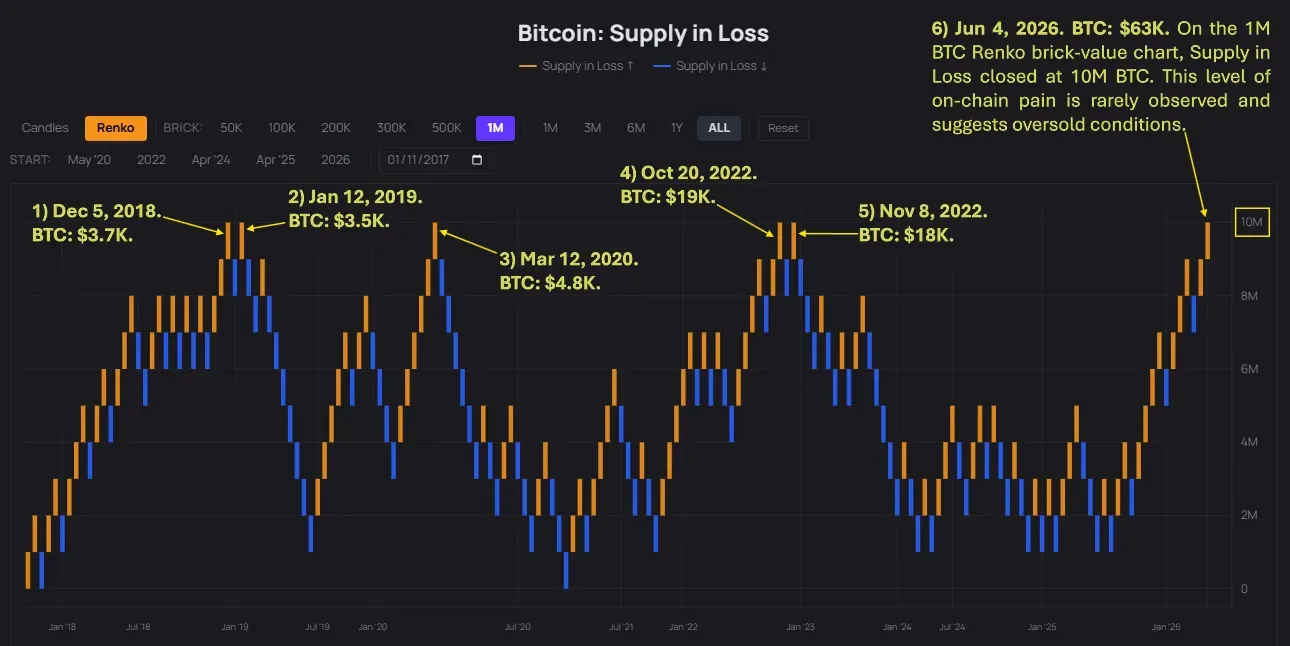
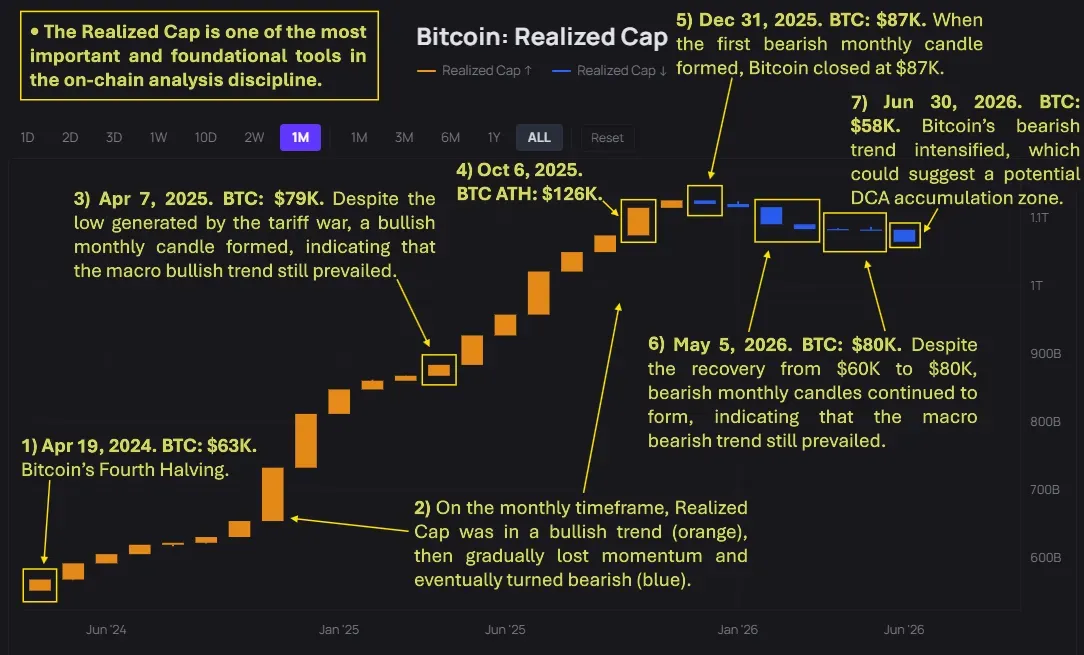
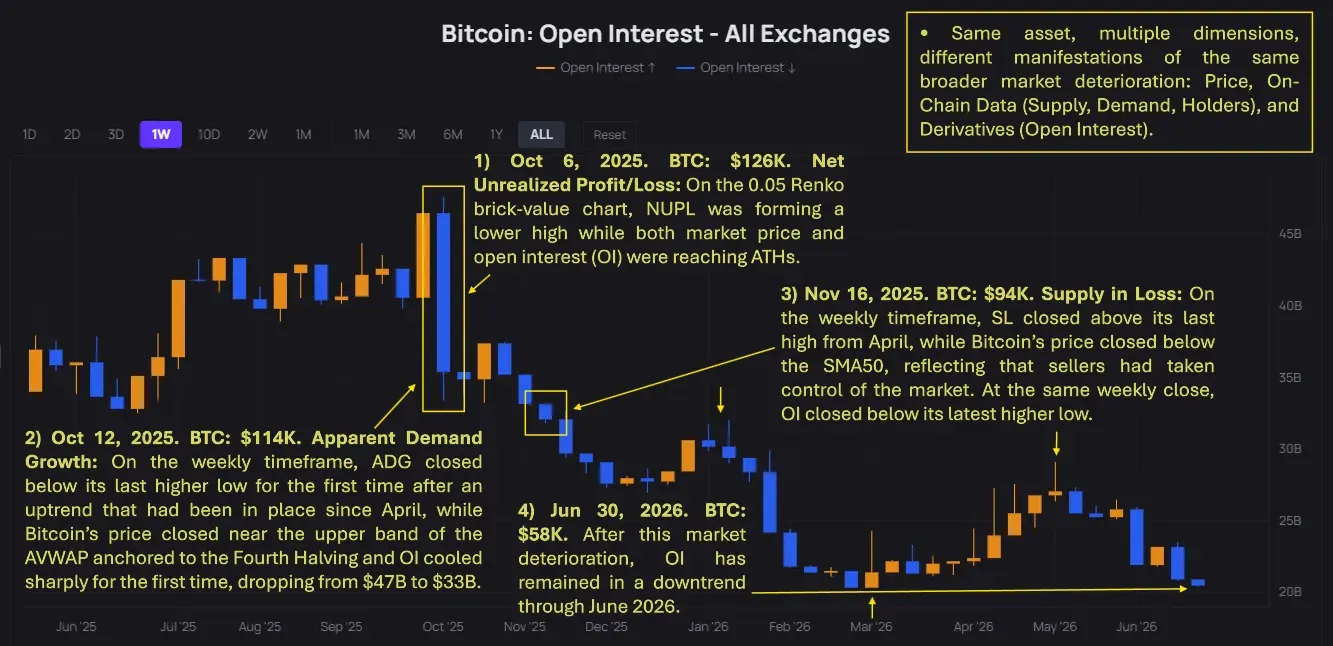
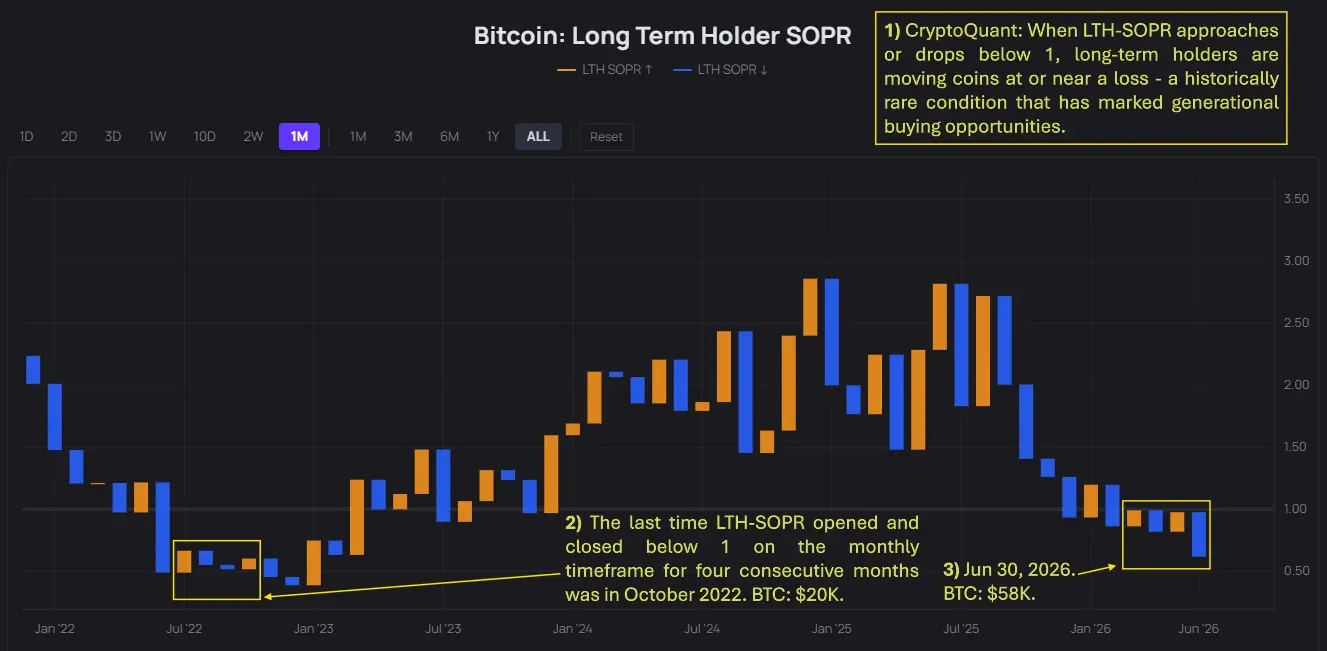
8) Finally, I show some analyses that I conducted the same month, showing the correlation between on-chain indicators and the market price.
Lower Demand, Lower Price, More Supply in Loss:
D) Final Clarifications.
• I reference different types of links related to CMT and authors who have delved into Japanese charting and other professional trading techniques:
https://cmtassociation.org/association/history/
https://cmtassociation.org/presenter/steve-nison/
https://cmtassociation.org/presenter/dan-valcu/
https://cmtassociation.org/presenter/brian-shannon/
https://cmtassociation.org/presenter/prashant-shah/
• If you are interested in learning more about this topic, I invite you to explore the technical dashboard I built on CryptoQuant; it contains 32 reference links, more than 30 developed charts, and various types of market analyses on BTC and ETH, combining: price action, on-chain data, and derivatives. It includes the history of Traditional Candles, Heikin-Ashi, Renko, Anchored VWAP, and Realized Price. It can be translated into Spanish right there.
https://cryptoquant.com/community/dashboard/69706233a662164c84864d2c
• Finally, I emphasize that each reader must decide whether or not it is worth investing in any asset in the short, medium, or long term if they consider them undervalued. What is presented is not investment advice; everyone should conduct their own research. Always invest prudently, with buying and selling strategies. Investments can be volatile and high-risk.

Comments