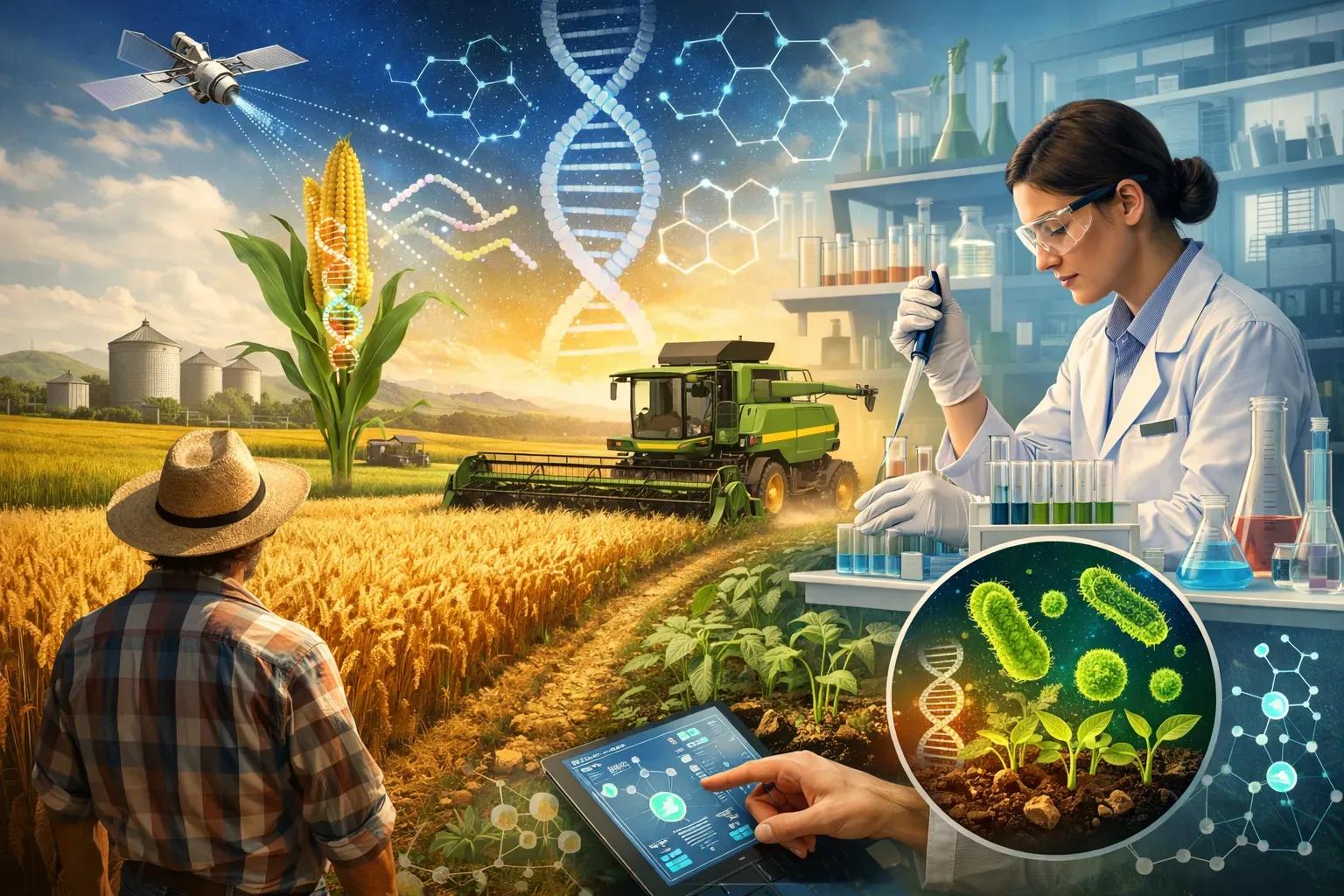
For decades, when talking about the Argentine countryside, the image was almost always the same: fertile land, heavy machinery, seeds, and physical labor. Today, this landscape is complemented by laboratories, genetic editing, designed microorganisms, and applied science.
Agrobiotechnology is no longer a futuristic promise. It is one of the most powerful tools Argentina has to transform its production model and lead a new era in agriculture.
What is agrobiotechnology?
Agrobiotechnology is the use of biotechnology applied to the agricultural system. It combines genetics, microbiology, molecular biology, bioinformatics, and bioprocesses to improve plants, animals, and microorganisms, optimize yields, and make production more efficient and sustainable. It includes, for example, the development of genetically modified crops, biofertilizers and biostimulants, biopesticides, gene editing (such as CRISPR), molecular diagnostics, production of high-yield seeds, and animal genetic improvement.
Why is it key for Argentina?
Argentina is one of the countries with the greatest agrobiotechnology potential in the world. It has diverse ecosystems, a solid scientific tradition, agro-exporting power, growing biotech startups, and national agricultural research organizations.
A traditional example is the development of transgenic soybeans in the 90s when Argentina introduced glyphosate-resistant genetically modified soybeans. It was not just a new seed; it was a structural change that allowed our country to become one of the largest producers and exporters of soybeans in the world. Biotechnology ceased to be a laboratory concept and became an economic, productive, and geopolitical tool.
Following a similar logic, a version of transgenic wheat (HB4) with greater drought tolerance was also developed through genetic engineering. This technology aims to increase productive stability under adverse climatic conditions, a key challenge for global agriculture.
In 2024, Argentina achieved a historic record by approving 25 new biotechnological products for agriculture, reflecting the dynamism of the regulatory framework and the arrival of innovations in the field.
Argentina has a historic opportunity. It has land, talent, institutions, and an expanding biotechnology ecosystem. The real challenge is not whether the countryside will transform, but whether the country will be a protagonist of that transformation, investing in innovation, creating clear rules, and betting on a scientifically developed agrobiotechnology.
By Sol Aebi, student of the Degree in Biotechnology at UADE

Comments