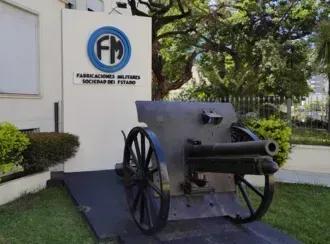
Far from being limited solely to the acquisition of weapons, the increase in defense spending in Europe, the highest in decades, is generating a much deeper transformation than just military capabilities. Behind European rearmament, investments are being driven in metallurgical, chemical, electronic, naval, and aerospace industries. The demand for new systems and maintenance services is growing at a pace that many countries cannot meet with their installed capacity. In this context, some economies are seeking to expand their supplier networks, opening a window of opportunity for countries that retain industrial capabilities in the sector.
A Market That Is Expanding Again
The Russian invasion of Ukraine marked a turning point for the global industry, as since then many European countries and the European Union itself have announced modernization programs for their Armed Forces and sustained increases in military budgets.
While Germany approved an extraordinary fund to modernize its defense and Poland launched one of the most ambitious re-equipment programs in Europe, NATO urged its members to increase spending to above 2% of GDP. At the same time, the European Union began to allocate more resources to strengthen its industrial base and reduce its dependence on external suppliers.
The result of these decisions is a greater demand for industrial goods, raw materials, and components that exceeds the production capacity of many European companies, especially in areas such as ammunition, explosives, propellants, specialized steel, and electronic systems.
What Role Does Argentina Play?
This growth in the demand for the aforementioned inputs presents an opportunity that Argentina could take advantage of. Far from competing with large exporting powers of armament, the opportunity for the country seems to lie in much more specific segments of the defense industry's value chain.
This context marked by the sustained increase in military spending and the need to expand production capacity opens up spaces for suppliers of inputs, components, maintenance services, and technological developments. In that scenario, the country has capabilities that could turn out to be competitive: Fabricaciones Militares has experience in the production of explosives, ammunition, and specialized chemicals; INVAP (Investigaciones Aplicadas S.E.) has developed internationally recognized radars and technological systems; while FAdeA (Fábrica Argentina de Aviones "Brigadier San Martín" S.A.) and TANDANOR (Talleres Navales Dársena Norte) accumulate knowledge in maintenance, modernization, and repair of aircraft and vessels respectively.
Although these capabilities do not position Argentina to compete for leadership in the global defense market, they could allow it to integrate into international supply chains, as long as it achieves international certifications and maintains a long-term industrial policy.
An Opportunity That Goes Beyond Exports
This European need to rebuild its arsenals also opens a window to modernize Argentine capacities through cooperation, technological transfer, and participation in joint projects with Western partners.
Through these agreements, the country could access new technologies, incorporate more advanced production processes, and strengthen already existing industrial capabilities. In this sense, INVAP, FAdeA, TANDANOR, and Fabricaciones Militares could not only benefit from greater international demand but also from cooperation programs that allow for infrastructure improvements, modernization of production lines, and development of new projects.
Such strategies are not a theoretical hypothesis, but international experience shows that these types of partnerships tend to generate benefits that transcend exports, fostering human resource development, innovation, and industrial competitiveness. A clear example is Poland, which in its recent military re-equipment programs with South Korea negotiated agreements that included local production, technological transfer, and the participation of national companies in manufacturing and maintenance tasks, which not only strengthened the military capabilities of the country through the incorporation of K2 Black Panther tanks but also boosted the development of its industry and the training of highly specialized personnel.
A Window That Will Not Remain Open Indefinitely
The new cycle of defense investments represents one of the most significant structural changes in recent decades, although transforming that international situation into a concrete opportunity will not be easy.
The Argentine industry faces budgetary limitations that, combined with increasingly intense competition from countries like South Korea or Israel, which in recent years have consolidated strong industries capable of offering competitive products and financing for their exports.
Seizing the opportunity will depend less on the international context than on the country's capacity to plan for integration into global supply chains. In a scenario where geopolitics begins to redefine priorities, the defense industry could cease to be just a strategic issue and also become a tool for productive development and foreign currency generation. The real challenge will be to transform that favorable context into a long-term strategy capable of converting a geopolitical situation into a development policy.

Comments