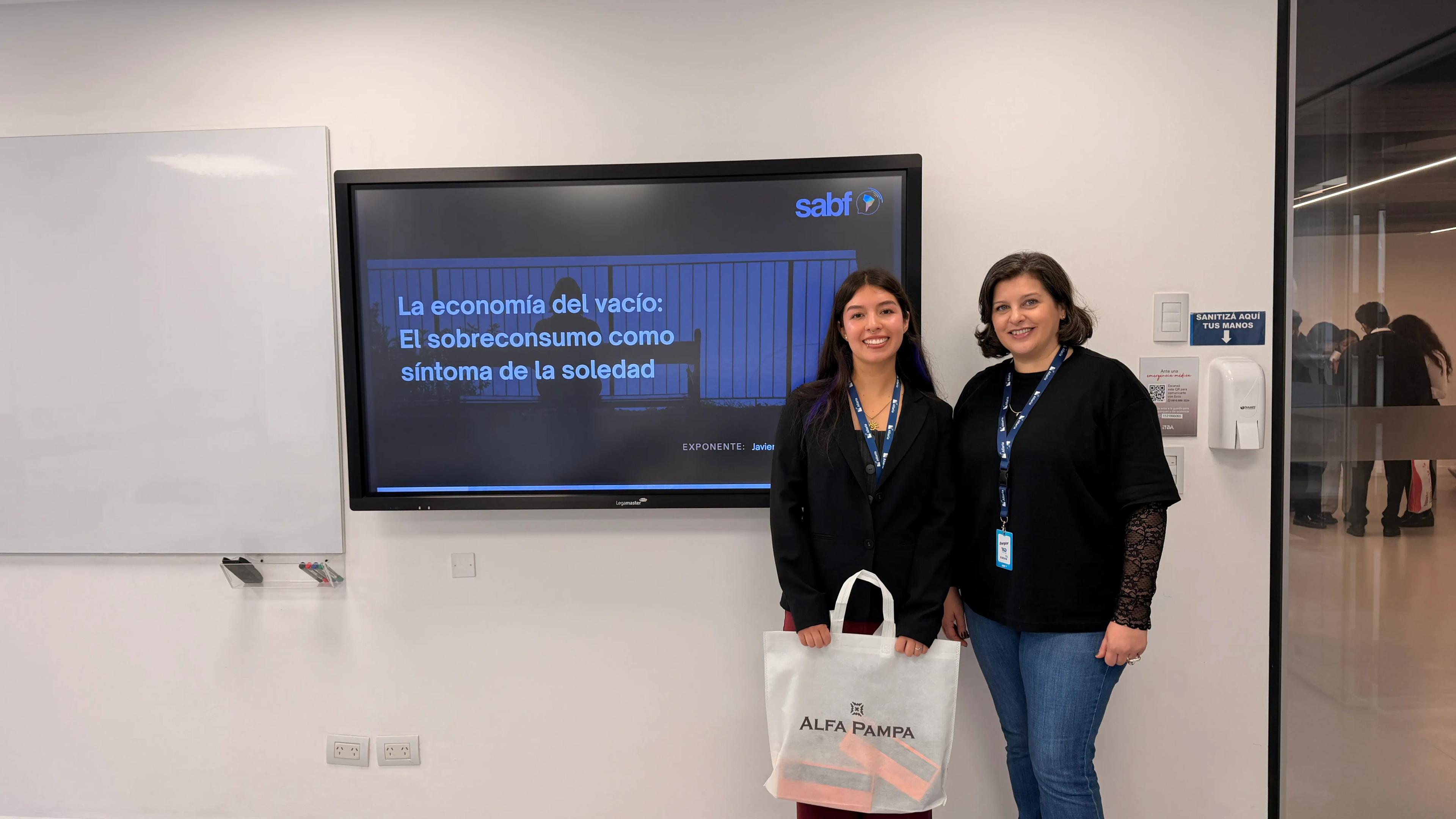
In our modern and digitized society, various indicators reveal that there is an overconsumption of social networks, our natural resources, and also of material goods. Based on this, the South American Business Forum (SABF) invites us to reflect: “Should we change? And if the answer is yes, then: What should we change?” (SABF, 2026). To find solutions, there are a series of preliminary questions to resolve, such as, for example, what is the cause of this consumption continuing to rise? In this context, the following answer is proposed: loneliness. Then, we ask ourselves: who takes responsibility for overconsumption? Although this phenomenon is complex to address, the analysis will focus on the role of companies.
The World Health Organization (WHO) indicates that: “Currently, nearly one in six people globally reports feeling lonely” (WHO, 2025). For this reason, the WHO declared loneliness a “global public health problem.” The magnitude of the problem is such that they claim its mortality effects would be equivalent to smoking 15 cigarettes a day (WHO, 2025). At a societal level, it is essential to understand this concept in greater depth, and to understand that being alone is not the same as feeling alone; the perception of loneliness varies from person to person. However, loneliness is also a measurable variable, and we can explain it through other variables. In a study, statistically significant variables in the development of feelings of loneliness in a person were sought, with the chosen ones being: negative affect, low risk-taking in social situations, and lack of affiliative motivation, all predictors of loneliness (Pourriyahi et al., 2021)
As long as loneliness exists, overconsumption exists as a response, since it attempts to fill a social void. We have all been victims of this, buying junk food when we are sad, buying clothes after an achievement, or making luxury purchases as compensation. At the same time, let’s not forget digital overconsumption. Social networks function as a refuge. Their excessive use would deepen the feeling of isolation in university students. It is statistically proven that those who use social media for at least 30 hours a week are 38% more likely to feel lonely than those who do not exceed 16 hours (Olivares, 2026). Loneliness leads us to need consumption as emotional compensation. Consumerism works as a quick way to modulate unpleasant internal states; however, this feeling of improvement is fleeting (Psychology and Mind, 2025).
The problem of overconsumption as a response to the feeling of loneliness is precisely that its effect is temporary, as already mentioned. Initially, loneliness is expressed in a lack of connection and social isolation (WHO, 2025). Thus, compulsive purchases, digital consumption, and emotional responses are generated. It is known that dopamine can increase by 50% to 100% during these types of rewarding experiences (Fundación Diario de Navarra, n.d.), and that is why it acts as a vice. However, this feeling of well-being lacks a real connection, and ends up generating side effects such as: less development of deep interpersonal relationships, replacement of face-to-face social interaction, and more time spent on individual activities. Thus, a vicious circle is created between these two concepts: loneliness and overconsumption.
As a future statistician, I propose loneliness as a market need. The challenge from our field is not to understand how much the population consumes, but why they consume it. The research problem is that the current market poorly satisfies the need for meaningful social connection. We interpret loneliness as a quantifiable gap between real and desired social interaction. For this research, market segmentation is necessary, that is, selecting population groups of interest, for example: university students, professional adults, people living alone. Each group has different reasons for consuming, and feels loneliness for different reasons. Loneliness is not the same for everyone; it is subjective. Thus, through the development of focus groups, correlation studies, and regression, we could understand what type of connection is being sought in the market.
In the course Introduction to Market Research, taught at the Catholic University of Chile, Professor José Miguel Ventura has shared stories about companies he has worked with through his market research arm, and the findings related to consumption and loneliness are unexpected. First, his company worked with a famous movie company in Chile, and they had the mission of increasing the number of people going to see movies, very simple. The researcher began profiling those who attended the functions and asked the participants why they went to the cinema, the main reason was: because they did not feel lonely in the cinema. Something similar happened with the company Sodimac, dedicated to selling construction materials. They profiled those who attended the store and noticed that most people did not go to buy items, but to converse with the guards and sellers at the site.
There are countless cases like those recounted by Professor Ventura. From this, I would like to emphasize that for companies, it is not enough to sell; social responsibility is also needed. Companies benefit when they foster a sense of belonging, social interactions, and community development. The above is achieved through the design of social experiences and their implementation. The challenge is not to generate disproportionate consumption but to contribute to deeper and more meaningful connections in our society.
Editorial note: This article exclusively contains the original essay by Javiera Sotolincoñir González (Catholic University of Chile (UC), Chile), whose work was selected for the quality and relevance of its proposal to be shared with the participants of the SABF. The content has not been edited, modified, or intervened by the SABF. The participant retains all copyright over their work.

Comments