On the morning of January 22, 2008, my mother abruptly woke me up to help her save the most important things in the house. I was still half asleep, not understanding why her voice sounded so different. But when I got out of bed, I felt the slippers —those rubber sandals you wear around the house— soaked. The water reached my ankles. The flood had reached us, and our Mamore River had overflowed.
I remember that morning with a strange clarity. My mother’s urgency. The things piled up haphazardly. The adults talking quietly, though with a tension that was still palpable. Outside, the yard already looked like a curichi, as we call those places in the east where water collects and stays. I was still a girl and didn’t fully understand what was happening, but I felt something that stayed with me: the essential only seems invisible until it's gone.
Over the years, I understood that this memory had left me with a question. Why do such basic things for living well remain so fragile? Light, water, a dry house, tranquility. All of this, which should sustain life without being noticed, could disappear in an instant. Later on, that question took a different shape: it was no longer just about vulnerability, but also about value. How do we decide what is worth it and what is not? Why do some things become indispensable only when we lose them, while others are disregarded even when they could support us?
That’s why, when I think of “Redefining consumption”, I don’t first think of shopping. I think about the way we learned to look at the world. We were taught a logic that is too simplistic: use and throw away, replace and move on. As if consuming were simply incorporating something new and leaving behind what has already served. As if progress consisted of moving forward by discarding.
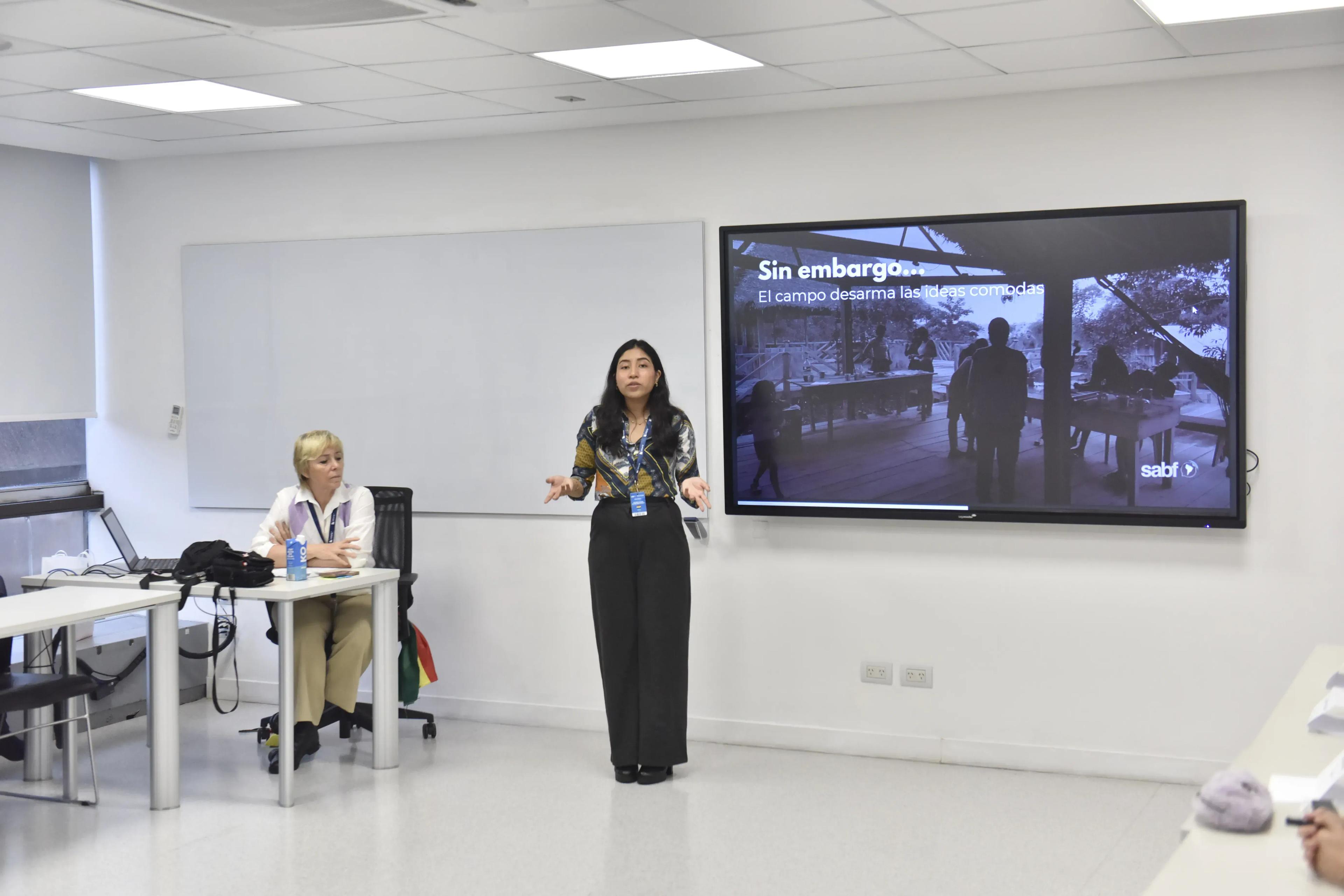
But real life doesn’t work that way. And the field, especially, quickly dismantles comfortable ideas. There, I saw a contradiction that continues to move me to this day: many families and producers live with high costs and little changüí —that small margin to breathe economically—, while materials that the system has learned to call waste accumulate around them. Organic remains, production waste, everything that smells bad, dirties, discomforts, or generates extra work. Things you want to get out of sight as soon as possible. And yet, precisely there, there can be relief for daily expenses, fertility for the land, and even energy.
The hardest thing to understand about this wasn’t the technical aspects. It was the cultural aspects. Because the problem wasn’t just that waste existed, but that we had already decided it was worthless. And when a society labels something as “trash”, it stops asking questions about it. It pushes it away. It hides it. It turns it into the end of a story. Deep down, I believe that this is where a significant part of overconsumption begins: not just in buying too much, but in having lost the ability to recognize value outside of what is new.
That’s why I’m not entirely convinced that the solution is simply to consume less. Of course, we need to review our habits. But if the answer remains solely in individual guilt, it becomes shallow. Not all people consume from excess; many consume from necessity. And not all sustainable solutions are valuable simply for sounding green. Some fail because they were thought out from a distance, because they look good in a presentation but don’t engage with the reality of those who should benefit.
That’s where, I believe, the debate becomes more honest. Redefining consumption is not romanticizing scarcity nor asking people to live with less by principle. It’s reviewing the criteria by which we assign value. It’s asking ourselves if an initiative truly improves people’s lives or merely soothes the conscience of those who designed it. It’s analyzing its ethics, its viability, and its relationship with the territory.
In contrast, when a solution arises from a real need and engages with the place where it will exist, something different happens. I've seen how materials that were previously avoided as uncomfortable could become useful. And while that might seem like a technical change, it’s actually a change in perspective. It’s a different way of understanding consumption: not as a linear path toward disposal, but as a relationship that can still be repaired.
Perhaps that’s why, for me, redefining consumption also means redefining dignity. Because a community does not improve only when it accesses more goods, but when it gains more capacity to decide about its resources, its costs, and its future. Sustainability becomes concrete in less dependency, less waste, and more autonomy.
We live in an era that easily confuses growth with accumulation, novelty with progress, and disposal with efficiency. But perhaps the real change doesn’t start when we learn to desire less, but when we learn to look better. When we stop admiring only the new and start asking ourselves what value we are ignoring out of habit.
If today I mentally return to that flood morning, I understand that it didn’t mark me only because of fear. It marked me because it taught me, unintentionally, that the essential should never be taken for granted. And years later, seeing how what seemed pure waste could regain meaning, I understood another thing: that often, a society does not impoverish just because of what it lacks, but because of all that it has stopped knowing how to look at.
Perhaps that’s where the change that this time needs begins. Not just in consuming less, but in recognizing better. In returning to look at what we pushed aside too quickly. In admitting that sometimes we call waste what could still sustain life. And in understanding that true progress does not always consist of having more things, but in relating better to what we already have.
Editorial note: This article exclusively contains the original essay by Valeria Alison Rivero Baldiviezo (Gabriel René Moreno Autonomous University, Bolivia), whose work was selected for the quality and relevance of its proposal to be shared with the SABF participants. The content has not been edited, modified, or intervened by the SABF. The participant retains all copyright rights over their work.

Comments