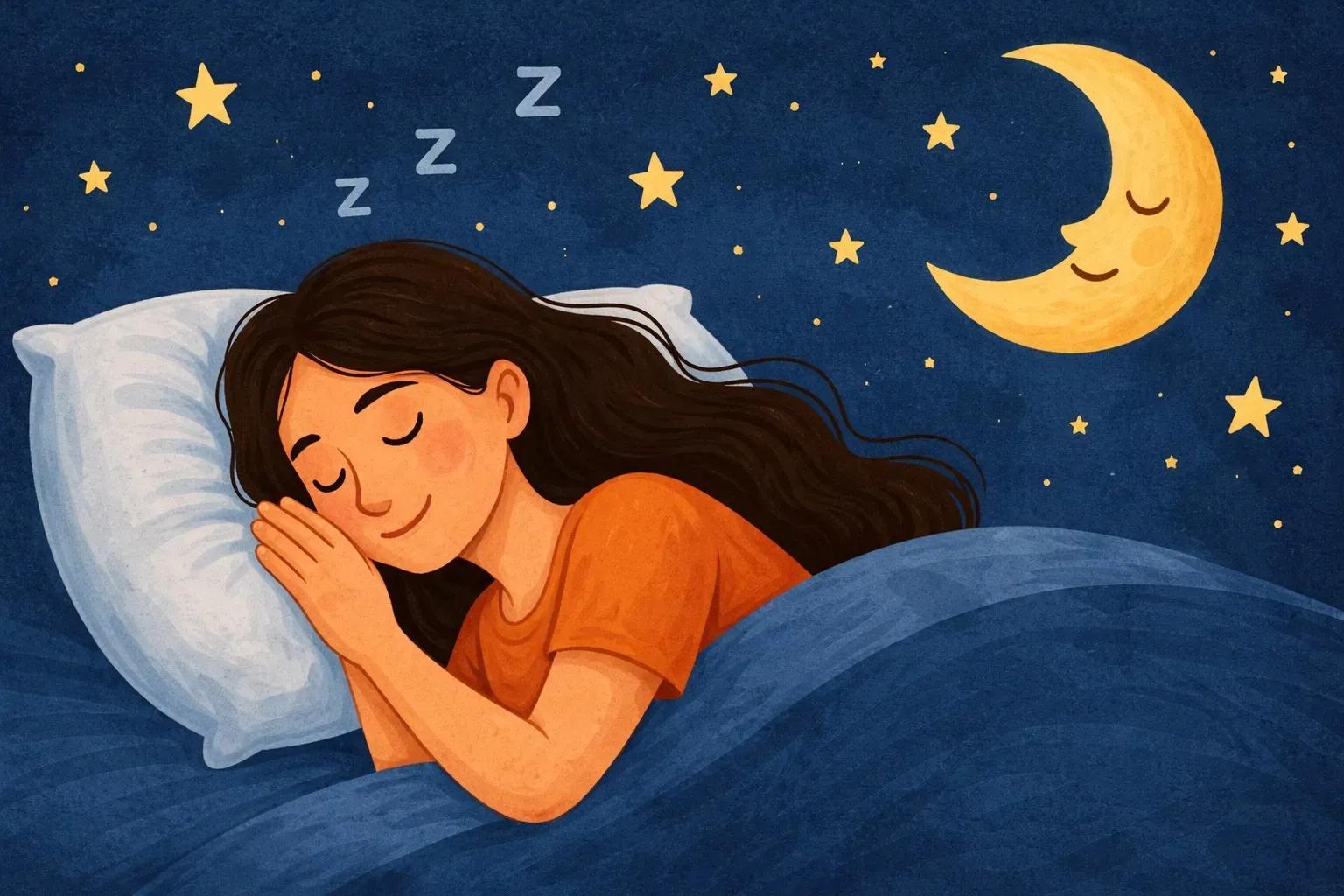
A long time ago, when we were kids and our grandmothers told us, “You have to sleep because if you don’t, you won’t grow!” this phrase seemed like a simple proverb, a subtle invitation to go to bed when we were stubborn about staying awake a little longer. However, science has shown that they were not so wrong after all, and in the current world where sleep deprivation is considered a silent epidemic and one of the biggest public health challenges of the 21st century, it sounds more like a warning or advice worth heeding.
It is known that sleep, in addition to promoting memory consolidation, performance, and well-being, is closely associated with tissue growth and metabolism regulation, partly by increasing the release of growth hormone (GH). This hormone is able to promote protein synthesis, stimulate lipolysis (that is, to use stored fat as an energy source), and regulate glucose. It also plays essential roles in bone muscle growth both during development and in adulthood. Many of the harmful consequences of sleep deprivation resemble those produced by GH deficiency, which provides evidence of the interaction between both. For example, it can lead to reduced muscle mass, increased visceral fat (the fat that surrounds vital organs), insulin resistance, and a higher cardiovascular risk.
But maintaining a good quality of sleep is not only important for “growing,” but also for proper elimination of harmful waste generated naturally during waking hours in our brains, as a consequence of cellular activity. The proper functioning of this “cleaning” system is critical for preserving neuronal health and preventing the buildup of substances that can lead to the development of neurodegenerative diseases such as Alzheimer’s, Parkinson’s, or ALS (amyotrophic lateral sclerosis).
As we have seen, for these and many other reasons, sleep is a non-negotiable biological need.
It is also interesting to mention that it is not a phenomenon exclusive to complex organisms like us, but also occurs in animals without a centralized brain or nervous system, such as jellyfish or anemones (which, yes, do not have a proper brain but have neurons that connect through networks). Ultimately, while sleep is perceived in different ways throughout the animal kingdom, almost all animals sleep.
Finally, the article does not aim to be alarmist or to encourage extreme sleep hygiene routines or to chase a fixed number of hours to sleep, since, just as with other physiological needs like hydration, the amount of necessary sleep varies according to age, individual biology, and the demands of the organism at a given moment.
The main message, on the contrary, seeks to encourage readers to maintain good sleep quality, reducing, for example, screen use and excessive caffeine consumption, and to question, primarily, increasingly frequent narratives (own or even from influencers and similar figures) that push us to be constantly productive in pursuit of “success,” but at the cost of our health, associating rest with laziness, lack of commitment, or failure.
Written by Manuela Beltrán, a student in the Biotechnology degree at UADE
Comments