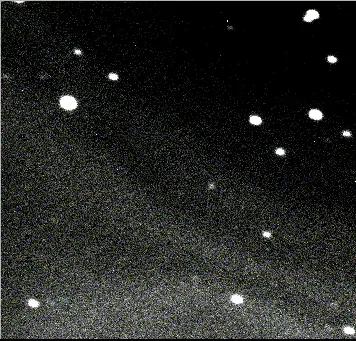
The existence of the asteroid 99942 Apophis has sparked growing interest both in the scientific community and the general public. This celestial object, discovered in 2004, has been classified as a potential threat to Earth due to its close trajectory. The central question that arises is: what are the implications of its possible impact and how are we preparing for this scenario? This analysis seeks to break down the current context, assess the associated risks, and explore the lessons we can learn from similar situations on an international scale.
🌌 Current situation and context
Since its discovery, Apophis has been the subject of multiple studies. According to NASA, it is estimated to have a diameter of approximately 370 meters and could impact Earth in approximately 2068. In 2021, an assessment indicated that there was a 0.0025% chance of collision during its closest approach, scheduled for 2029. This figure, although low, raises concerns due to the potential catastrophic consequences that an impact could entail. A study conducted by Purdue University estimates that the impact could release energy equivalent to 880 megatons of TNT, which could devastate a vast region.
🛰 Analysis of causes and factors
The concern for asteroids like Apophis is not new; however, modern technology has allowed for more accurate identification and tracking of these celestial bodies. The root cause of interest in Apophis lies in its orbital trajectory and its classification as a "potentially hazardous asteroid" (PHA). Historically, events such as the meteorite impact in Chelyabinsk in 2013, which caused significant but non-fatal damage, have highlighted our planet's vulnerability to these phenomena. As we advance towards a greater understanding of space, space agencies are investing in technologies to mitigate the risks associated with asteroids.
🌍 International comparison and global impact
On an international level, several countries have developed strategies to address the risk of asteroids. For example, Japan has led efforts with its Hayabusa mission, which successfully collected samples from asteroids and brought them back to Earth for analysis. In the United States, NASA implemented the DART (Double Asteroid Redirection Test) program to test asteroid deflection technologies. These efforts contrast with the lack of a coordinated approach in Latin America regarding the threat of near-Earth objects (NEOs). While countries like Russia have established clear protocols based on their historical experiences with minor impacts, Argentina still lacks a comprehensive strategy in the face of this threat.
⚠️ Implications and consequences
The implications of a possible impact from Apophis are profound. Economically, a catastrophic event could lead to millions in losses due to damage to critical infrastructure and loss of human life. The report from the Intergovernmental Panel on Climate Change (IPCC) indicates that extreme events can exacerbate existing economic crises and lead to massive migrations. For Argentina, where there are already significant economic challenges such as high inflation and heavy external debt, a direct impact could further worsen these conditions. The lack of preparedness can result not only in material losses but also in social destabilization.
🔍 Strategic perspective and future outlook
In the face of the risks associated with 99942 Apophis, it is crucial to adopt a proactive perspective. The lessons learned from other nations should guide our actions towards the development and implementation of effective protocols to monitor near-Earth objects. This includes increasing funding for research on NEOs and establishing effective international collaborations. As we approach the year 2029 and subsequently 2068, it is essential to foster an informed public culture regarding these potential risks and develop clear strategies to mitigate their adverse effects.
In conclusion, while the risk associated with 99942 Apophis may seem distant or unlikely today, scientific evidence suggests that we must be prepared for any eventuality. This phenomenon should undoubtedly serve as a call to strengthen our technological and institutional capacities in the face of emerging global threats.
Comments