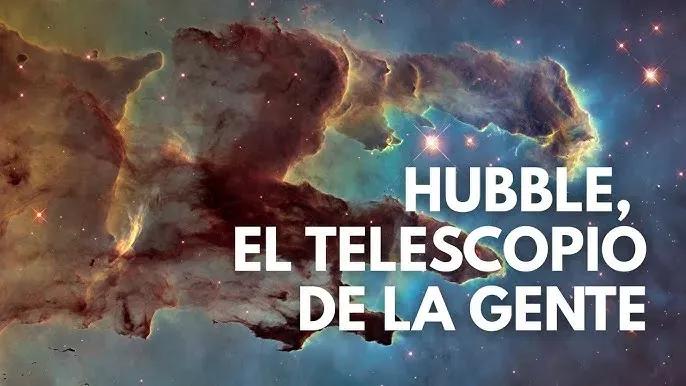
The Hubble Space Telescope, launched in 1990, has been a window to the universe that surrounds us. Since its first images, it has revolutionized our understanding of astronomy and cosmology. But why is it relevant today? In a world where technological advancements seem to happen at the speed of light, Hubble's legacy is measured not only by the images it captures but also by the impact it has on our quest for knowledge and how we perceive our place in the cosmos. This analysis will delve into its current status, causes, and factors that have led it to become a scientific icon, its international comparison, and the implications of its work for the future.
Current Status and Context
Since its launch more than three decades ago, Hubble has sent over 1.5 million observations into space, producing more than 150,000 scientific publications. According to NASA, these contributions have enabled fundamental discoveries about the expansion of the universe and supermassive black holes. However, with the advancement of new technologies like the James Webb Space Telescope (JWST), the question arises: what role will Hubble continue to play in astronomical research? Despite its technical limitations compared to JWST, Hubble remains an invaluable tool for observing phenomena such as supernovae and star formation.
Analysis of Causes and Factors
The success of the Hubble Telescope is based on multiple interrelated factors. First, its unique optical design allows it to capture images with unprecedented clarity. The correction of its initially flawed mirror in 1993 was a crucial milestone, allowing scientists to make observations that were previously impossible. Additionally, constant maintenance and upgrades through servicing missions have extended its lifespan beyond what was initially expected. This commitment to continuous improvement reflects a well-thought-out strategy by NASA to maximize the scientific return on this monumental investment.
International Comparison and Global Impact
Globally, other countries have developed their own space telescopes; however, few have had as significant an impact as Hubble. For example, the European Gaia telescope, launched in 2013, is designed to map our galaxy with unprecedented accuracy. Despite this, Gaia does not seek spectacular images but data on stellar positions. Meanwhile, Hubble has proven to be a bridge between pure science and public interest thanks to its stunning photographs of the cosmos. In Japan, the Hitomi telescope, while ambitious in its mission to study cosmic X-rays, left a brief legacy after failing shortly after launch; this highlights how technical challenges can limit even the best-intentioned projects.
Implications and Consequences
The impact of the Hubble Telescope extends beyond the scientific realm; it has influenced education and popular culture. The iconic images produced by Hubble have inspired entire generations to look up and question our place in the universe. However, it also raises questions about funding and priorities in science: while some advocate for greater investments in human space exploration or new technologies like AI applied to astrophysics, others argue that we should continue maximizing existing resources like Hubble before embarking on new costly projects.
Strategic Perspective and Future Outlook
Looking ahead, it is clear that the Hubble Telescope will continue to play a vital role in our cosmic explorations for at least another decade. Scientists suggest that combining data obtained by Hubble with that from the new James Webb Telescope could provide unique perspectives on complex astronomical phenomena. However, there are risks associated with relying too much on individual platforms; each technology has its natural lifecycle. Therefore, it is essential to consider how we can diversify our observational capabilities to ensure a continuous flow of discoveries.
In conclusion, as we celebrate the achievements of the Hubble Space Telescope and reflect on its lasting impact on science and our perception of the universe, it is crucial to remember that each technological advance opens doors to new questions and uncertainties. The quest for knowledge never stops; there are always more stars to discover and cosmic mysteries to solve. ✨

Comments